



09 Jun Which Solar Panel Is Best for Home Use?
A solar system can look excellent on paper and still be the wrong fit for your home. That is why the real question is not just which solar panel is best for home use, but which panel is best for your roof, your power use, and your long-term plans.
For South Australian households, that answer often comes down to a balance of efficiency, durability, warranty support and installer quality. The panel itself matters, but so does who designs the system, how it is installed, and whether the setup matches your daytime usage, battery plans and available roof space. If you want a system that performs properly for years, those details are not optional.
Which solar panel is best for home use in Australia?
For most homes, monocrystalline solar panels are the strongest all-round choice. They offer high efficiency, a clean appearance and better output from limited roof space, which makes them particularly well suited to suburban homes where every square metre counts.
That said, the best panel is not automatically the panel with the highest efficiency rating. A family with a smaller roof and high electricity usage may benefit from premium high-efficiency panels. A household with plenty of roof area and moderate usage may be better served by a well-made mid-range panel from a trusted manufacturer. The right result comes from matching the product to the property.
This is where many homeowners get caught out. They compare brochure claims without looking at practical outcomes such as orientation, shading, inverter compatibility and future battery storage. A quality installation team will assess all of that before recommending a panel.
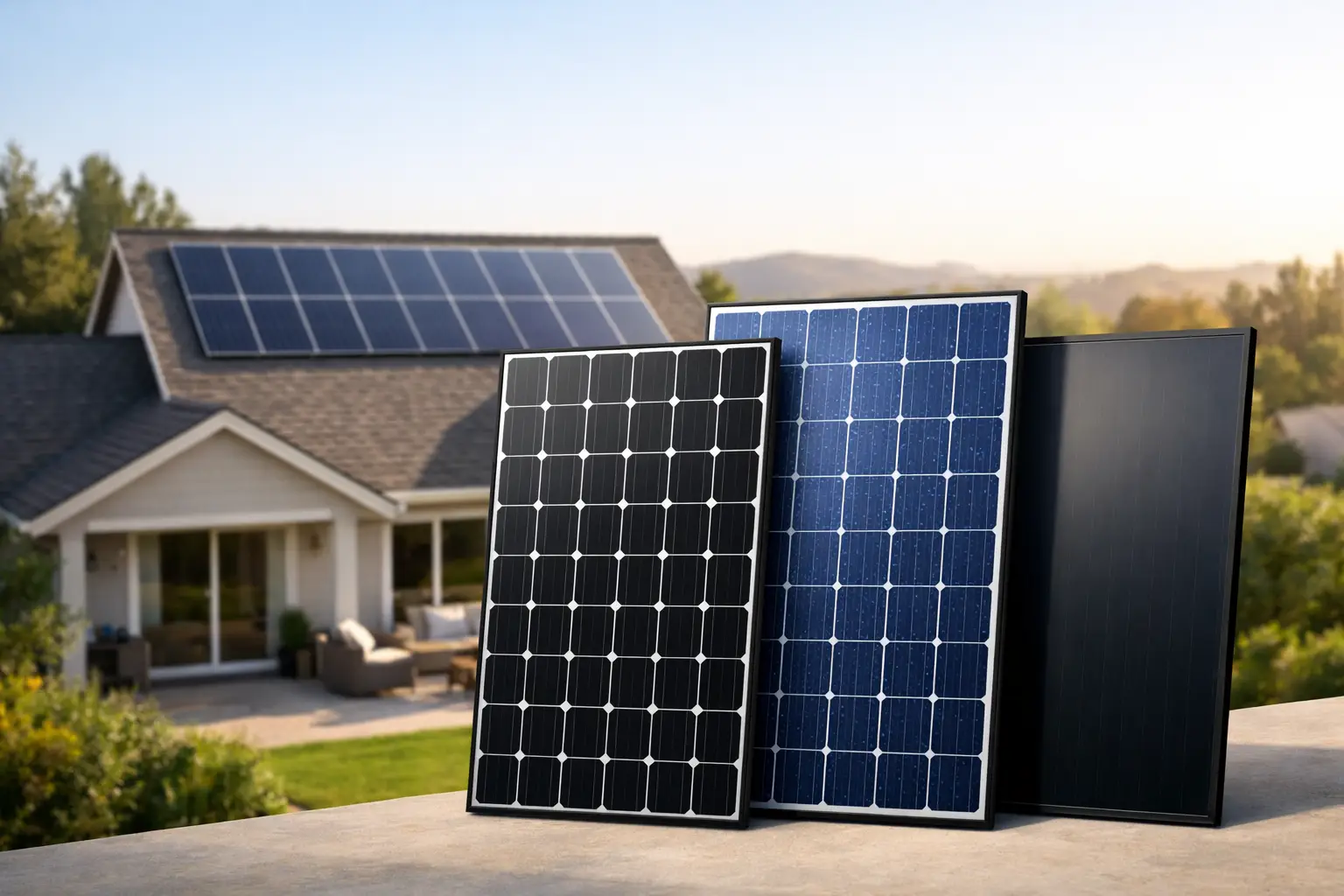
The three main panel types
If you are weighing up which solar panel is best for home use, it helps to understand the basic types available.
Monocrystalline panels
These are the most common choice for residential solar today. They are known for strong efficiency, reliable performance and a more uniform black appearance. For homes in South Australia, they are often the preferred option because they make better use of roof space and generally perform well over time.
They are especially useful when roof area is limited or when homeowners want to pair solar with battery storage later. Higher output per panel can make system design more flexible.
Polycrystalline panels
These were once a common budget option, but they are less frequently selected for modern homes now. They tend to have lower efficiency than monocrystalline panels, which means you need more roof space to generate the same amount of power.
They can still work in some situations, but for many households, the efficiency trade-off is hard to justify if roof space is valuable.
Thin-film panels
Thin-film panels are less common for standard residential rooftops. They are lightweight and can be suitable for specialised applications, but they usually offer lower efficiency and are not the usual first choice for a typical home installation.
For most homeowners, the real decision is not thin-film versus crystalline. It is usually which monocrystalline panel offers the best mix of quality, performance and support.
What actually makes one panel better than another?
A lot of solar marketing focuses on headline numbers, but the best panel for home use is judged by more than efficiency alone.
Efficiency matters, but context matters more
Higher efficiency panels generate more electricity from the same roof area. That is a major advantage if your roof is small, split across different faces, or affected by vents and chimneys.
But if you have a large, open roof and only moderate energy needs, ultra-high efficiency may not be the deciding factor. In that case, broader system design and panel reliability can be more important than chasing the top efficiency figure.
Temperature performance is often overlooked
Solar panels do not love heat as much as people assume. As temperatures rise, panel output can drop. In Australian conditions, especially through hot SA summers, that matters.
A good panel should have solid temperature performance, not just a strong lab rating. This helps the system hold up better during the periods when your air conditioning and daytime power demand may be highest.
Build quality and degradation rates count
Solar is a long-term investment. A panel that performs well in year one but degrades quickly is not delivering real value.
Look at long-term performance warranties and expected degradation rates. Stronger panels tend to keep a higher percentage of their original output over time. That matters for households planning to stay in the home and maximise savings over many years.
Warranty support should be realistic
A warranty is only useful if there is genuine support behind it. Product warranty length matters, but so does the strength of the manufacturer and the credibility of the installer handling the job.
This is one reason many homeowners prefer to work with experienced, fully accredited local installers rather than chasing the cheapest offer available. Good after-sales support is part of the system value.
The best solar panel for your home depends on your roof
The same panel can be perfect on one home and less suitable on another. Roof layout changes everything.
If you have a compact roof, premium monocrystalline panels often make sense because they squeeze more generation into a smaller area. If your roof has several directions or some afternoon shade, panel placement and inverter setup become just as important as brand or wattage.
For regional properties, there may be extra factors such as dust exposure, long cable runs, outbuilding supply or plans for battery backup. In those cases, system design becomes broader than simply choosing a panel model.
That is why the better question is often not which single panel is best, but which complete solar solution is best for your property.
Should you choose premium panels?
Sometimes yes, sometimes no.
Premium panels are usually worth considering when roof space is limited, your household uses a lot of electricity, or you want a system designed for strong long-term performance with battery integration in mind. They can also suit homeowners who want recognised quality backed by dependable product support.
A well-made mid-range panel can still be an excellent option when the roof has enough space and the aim is solid energy bill reduction without overcomplicating the setup. What matters is avoiding low-grade products that look attractive at the start but create performance or support issues later.
The best outcome is rarely about buying the most expensive panel. It is about choosing a panel tier that matches your household goals.
Don’t judge panels in isolation
A solar panel does not work alone. Even the best panel can underperform if it is paired with the wrong inverter, installed poorly, or placed on the wrong part of the roof.
This is where experienced installation makes a real difference. A properly designed system considers your daytime power use, seasonal patterns, future battery options and whether an EV charger may be part of the plan later on. Those pieces need to work together.
For many South Australian homes, the smartest approach is to treat solar as part of a wider energy strategy rather than a one-off purchase. If battery storage or Virtual Power Plant participation may be on the cards later, that should be factored in from the start.
Signs you are choosing the right panel
You are usually on the right track when the recommendation is based on your property rather than a generic sales pitch. A quality solar recommendation should explain why that panel suits your roof, how much generation is expected, and what trade-offs come with other options.
It should also come from a team with proper licensing, accreditation and a track record of installing systems that are built to last. For homeowners, peace of mind matters just as much as panel specs.
That is especially true when rebates, battery pathways and long-term energy savings are part of the decision. A trustworthy installer helps you make the most of the opportunity, not just sign off on a set of panels.
So, which solar panel is best for home use?
For most Australian households, a high-quality monocrystalline panel is the best fit. It offers the strongest mix of efficiency, appearance, roof-space performance and long-term value. But the best choice for your home still depends on your roof layout, power usage, budget priorities and whether you plan to add battery storage later.
If you are serious about reducing power bills and getting a system that performs properly in South Australian conditions, the safest move is to get advice tailored to your property. Allstate Solar helps homeowners choose proven solar solutions backed by experienced, fully accredited installation. Contact us today if you want a system designed to deliver lasting value, not guesswork.
The right panel is the one that keeps producing quietly in the background while your bills come down and your confidence in the system goes up.
No Comments