



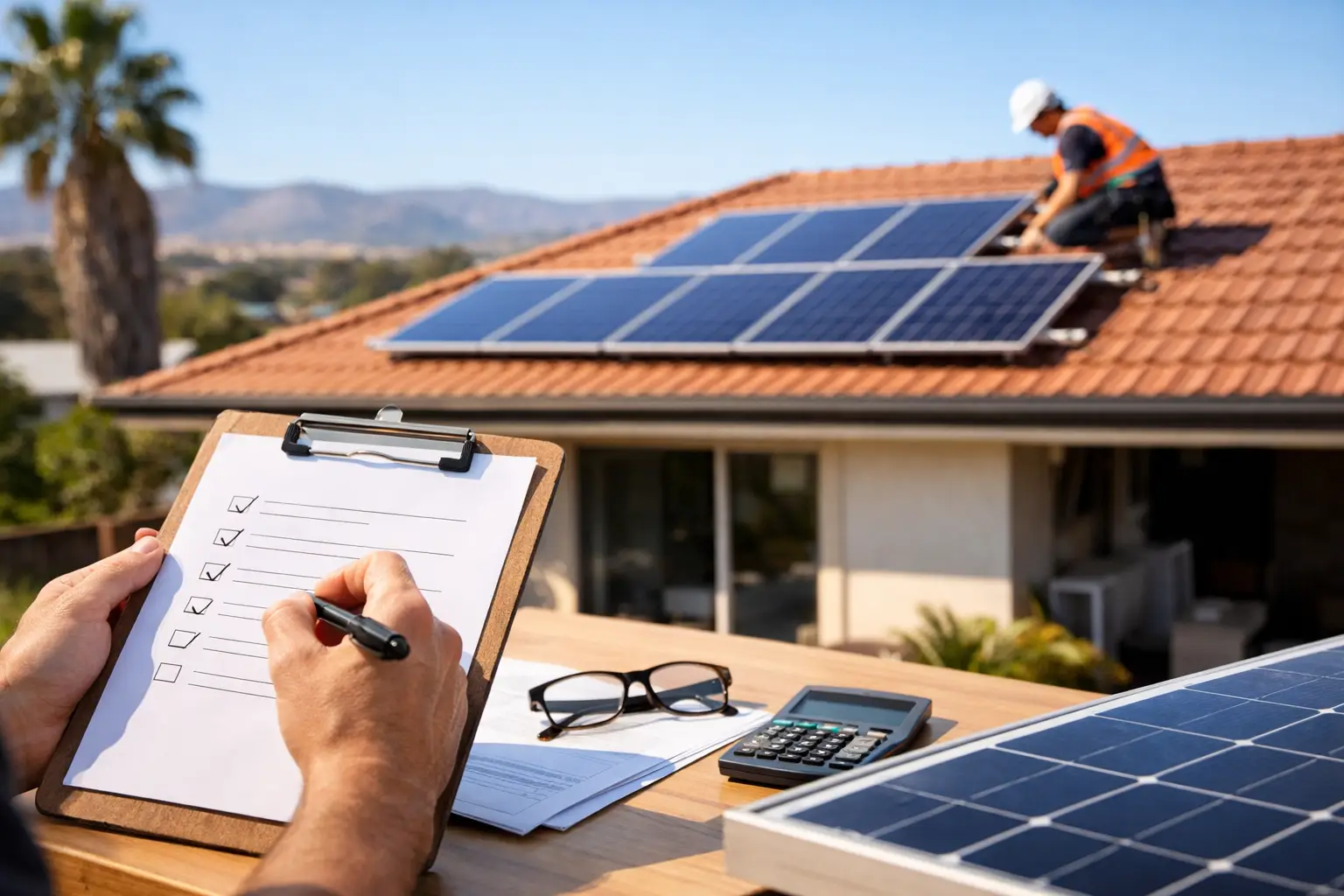
19 Jul Solar Quote Checklist for South Australian Homes
A solar quote should give you far more than a panel count and a final figure. It should show how the system will work on your roof, what it is designed to offset, who is responsible for the installation, and what support remains once the job is complete. This solar quote checklist helps South Australian households, regional property owners and businesses compare proposals with confidence.
A well-designed solar system can reduce reliance on grid electricity for years. A poorly specified one can leave you with limited generation, avoidable export constraints, difficult warranty claims or an installation that does not suit the way you actually use power. The difference is often found in the detail behind the quote.
Start your solar quote checklist with your energy use
Before comparing equipment, look at the property and the electricity it consumes. A credible solar proposal should be based on recent bills, usage patterns and the goals you have for the system. For some households, the priority is lowering daytime energy purchases. For others, it is preparing for a battery, charging an EV, running a pool pump, or improving resilience during high electricity-cost periods.
Ask whether the proposed system size reflects your actual consumption rather than simply filling available roof space. Bigger is not automatically better if much of the generation will be exported at a low rate. On the other hand, undersizing a system to make a quote look attractive may limit its long-term value.
For regional properties, the discussion should also cover long cable runs, sheds, pumping loads, machinery, communications equipment and whether a hybrid or off-grid arrangement is more suitable. Commercial clients should expect an assessment of operating hours, peak demand patterns and future expansion plans.
Check the proposed system design, not just the panel brand
A quote should clearly identify the solar panels, inverter and any battery equipment proposed. Recognisable equipment matters, but the design matters just as much. The installer should explain where panels will sit, their orientation, likely shading issues and how the inverter has been sized for the array.
South Australian roofs are rarely identical. A north-facing roof can perform differently from east-west roof sections, while nearby trees, chimneys, satellite dishes and neighbouring buildings can affect production at different times of year. A quality proposal accounts for these site conditions rather than relying on generic assumptions.
Review whether the quote includes the following information:
- The number, make and model of solar panels, plus total system capacity
- The inverter make, model and rated capacity
- A site layout showing proposed panel locations and roof sections
- Expected annual generation and the assumptions used to calculate it
- Any shading, switchboard, roof access or network constraints identified during assessment
- Whether the system is battery-ready and what would be required to add storage later
Generation estimates are useful, but they are estimates. Weather, household behaviour, shading changes and electricity network requirements can all influence real-world outcomes. Treat an unusually high forecast with care and ask how it was calculated.
Make sure the design supports future battery storage
A battery can help you store more of the solar energy generated during the day for use in the evening. It may also suit households seeking greater energy independence, EV owners who charge at home, and properties with significant after-dark consumption.
If you are not installing a battery immediately, ask whether the proposed inverter and switchboard arrangement allow for a practical future upgrade. Some homes will be better suited to an integrated battery system, while others may need additional components or electrical work. It depends on the existing system, your goals and the technology selected.
Where a Tesla Powerwall or BYD battery system is proposed, the quote should state the battery model, usable storage capacity, backup capability if applicable, and the equipment included to connect it safely. Do not assume every battery provides the same level of backup during an outage. Backup design must be discussed specifically.
Confirm installer credentials and accountability
Solar is an electrical installation on your home or business, not a boxed product delivered to the door. The team responsible for design, installation and compliance deserves as much attention as the equipment itself.
Your quote should identify the installing business and make it clear that appropriately licensed electricians and accredited solar professionals will complete the work. Ask who will manage the project from site inspection through to commissioning, grid connection paperwork and handover.
It is also reasonable to ask about insurance coverage, workmanship protections and the company’s experience installing systems in South Australia. A locally established provider understands local roof types, distribution network processes, switchboard conditions and the practical realities of Adelaide and regional installations.
Be cautious of vague proposals that do not name the responsible installer or that leave major site requirements to be sorted out after acceptance. A transparent provider will explain what is included, what needs confirmation, and how any unexpected site issue will be handled.
Understand rebates, approvals and paperwork
Government-backed incentives can make solar and battery projects more accessible, but eligibility rules and available support can change. Your quote should explain the applicable incentives in plain language, the assumptions used and whether the stated system configuration meets the relevant requirements.
For eligible battery projects, ask how the provider will assist with the Battery Rebate Scheme process and what documentation is required from you. It is wise to confirm the timing of approval, installation and any conditions that apply before making a decision.
The installer should also outline responsibility for electrical certificates, network applications and meter-related coordination. These steps can affect when your system is approved to export energy and when it can be fully commissioned. A professional installation service manages the process carefully and keeps you informed.
Compare warranties in practical terms
Warranties can look impressive on paper, but the useful question is who will help if something goes wrong. There may be separate warranties for panels, inverters, batteries and installation workmanship. Your quote should distinguish between them clearly.
Ask how warranty support is handled if an inverter develops a fault, a panel has a manufacturing issue, or battery monitoring identifies a problem. Will the installer be your first point of contact? Is labour for diagnosis or replacement addressed? How will you know the system is operating as expected?
Monitoring is particularly valuable because it gives you visibility of solar generation, household consumption and battery behaviour where storage is installed. It can also help identify a performance issue sooner rather than discovering it months later on an electricity bill.
Look for exclusions before you accept the quote
A detailed quote should set expectations around the work included and any conditions that could affect the installation. This is not a sign that a provider is difficult to deal with. It is a sign they have considered the job properly.
Review whether the proposal addresses switchboard upgrades, roof repairs, asbestos risks, difficult access, trenching, travel to regional sites, three-phase requirements, meter changes and network limitations. Not every property needs these works, but they should not come as a surprise after installation is underway.
For commercial systems, clarify access arrangements, shutdown needs, safety requirements, staging and whether production can continue while installation occurs. The right approach protects both your staff and your operations.
Ask what happens after installation
The best solar quote is backed by a clear handover. You should know when the system will be commissioned, how to use the monitoring app, where to find product documents, and who to contact if you have a question after the installers leave.
At Allstate Solar, the focus is on designing solutions around how South Australians use energy, then delivering the work with qualified, accredited trades and clear support from enquiry to handover. That approach matters whether you are installing solar panels on a family home, adding a premium home battery, planning EV charging or reducing operating costs at a business.
A solar system is a long-term property investment, so give the quote the same care you would give any major electrical upgrade. Bring your bills, your future plans and your questions to the conversation. The right installer will welcome the detail, explain the trade-offs clearly and provide a system you can rely on long after the first sunny day.
No Comments