



19 Sep Which Solar Inverters Suit SA Homes Best?
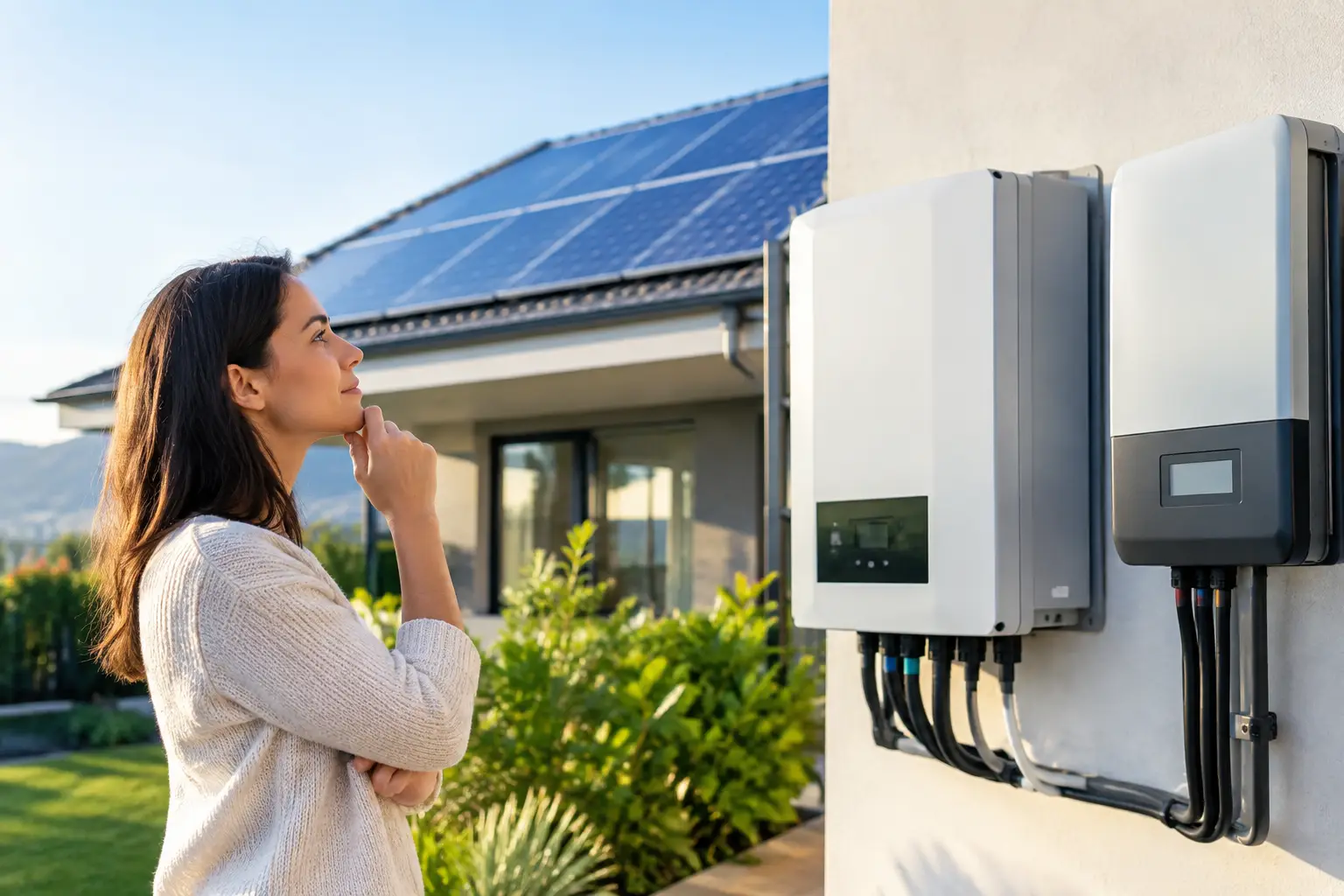
A solar system can have premium panels on the roof, but solar inverters are what make that generation useful inside your home or business. They convert the direct current (DC) electricity produced by solar panels into alternating current (AC) electricity for your appliances, switchboard and, where applicable, battery system. Get the inverter choice right and your system is positioned to perform reliably for years. Get it wrong and even a well-sized panel system may not deliver the value you expected.
For South Australian properties, the right answer depends on more than roof size. Summer heat, shading, household consumption, battery plans, EV charging and export requirements all influence which setup makes sense.
What solar inverters do for your system
Your panels generate electricity whenever there is usable daylight, but that electricity cannot be used directly by most household appliances. The inverter safely converts it into the power your property uses. It also manages how the solar system responds to changing conditions, including cloud cover, high network voltage and grid interruptions.
A quality inverter continuously looks for the most productive operating point from the solar array. In plain terms, it helps turn available sunshine into as much usable electricity as possible. It monitors performance too, giving owners visibility over generation and, depending on the system, household use, grid imports and battery activity.
This is why the inverter deserves the same attention as the panels. It is the working control point of a solar installation, not an add-on chosen at the last minute.
Choosing solar inverters for an SA property
The best inverter is not necessarily the largest unit or the one with the longest feature list. It needs to match the property, the planned solar array and the way power is used across the day.
Start with your daytime electricity use
A household that runs air conditioning, a pool pump, cooking appliances or an EV charger through the day can use a significant share of solar production as it is generated. A properly designed inverter helps support that load while allowing any surplus to be exported or stored.
If the property is empty during the day and most consumption happens after work, a battery-ready or hybrid approach may be more valuable. The aim is not simply to generate more electricity. It is to increase the amount of solar energy working for you rather than being bought back from the grid later at retail rates.
Commercial properties often have a different profile. Businesses with daytime operations may be well placed to consume solar as it is produced, making inverter sizing and system design particularly important for reducing operating costs.
Consider roof orientation, shading and panel layout
One roof is rarely as simple as it looks from the street. Panels may sit across north, east and west-facing roof sections. A chimney, tree, vent or neighbouring structure can cast shade at certain times. Different roof angles can also affect production.
Traditional string inverters are often an efficient solution where panels receive broadly consistent sunlight and can be grouped sensibly. When roof sections face different directions or partial shading is an issue, the design may require multiple maximum power point trackers, optimisers or another approach suited to the site.
There is no universal winner. More complex technology can help address challenging conditions, but it should solve a genuine site issue rather than add unnecessary complexity. A qualified site assessment is the right place to make that call.
Plan for a battery before you need one
If battery storage is part of your plan, tell your installer from the outset. A battery-ready inverter or hybrid inverter can make future expansion simpler, while some battery systems use their own dedicated inverter. The right arrangement depends on the battery selected, existing equipment and whether backup power is a priority.
For many South Australians, a battery can help shift excess daytime solar into the evening, when household demand often rises. It may also support participation in an eligible Virtual Power Plant program, subject to system compatibility and program terms. Tesla Powerwall and BYD battery solutions are examples of established options that can form part of a properly designed home energy setup.
Backup power deserves a separate conversation. Not every solar and battery system provides backup during a blackout, and not every backup configuration powers the entire property. You may choose to cover selected essential circuits, such as lights, refrigeration, internet and a few power points, rather than every high-demand appliance. Clear expectations before installation prevent disappointment later.
String, hybrid and off-grid inverter options
Most grid-connected homes use a string inverter. Panels are connected in groups, or strings, and their output is managed by the inverter. This is a proven and practical option for many homes and businesses with straightforward roof layouts.
A hybrid inverter combines solar inverter functions with battery capability. It can be a sensible choice for households that want to install a battery now or retain flexibility for later. However, compatibility matters. Batteries, backup equipment, metering and switchboard arrangements must work together as a complete system.
Off-grid inverters are designed for properties without a reliable grid connection, including regional sites where energy independence is essential. These systems need careful engineering around battery capacity, solar generation, seasonal consumption and backup generation. An undersized off-grid system can create avoidable restrictions, especially through winter or during extended periods of poor weather.
The key is to choose based on your actual needs. A suburban family looking to cut evening grid use needs a different solution from a regional property running pumps and sheds, or a business seeking to manage daytime demand across multiple loads.
Heat, location and installation quality matter
South Australia’s hot summers place real demands on electrical equipment. Inverters are built to operate within specified temperature ranges, but very high ambient temperatures can affect performance. Installation location matters: a shaded, ventilated position is generally preferable to a west-facing wall that absorbs intense afternoon heat.
The inverter also needs suitable clearance, weather protection where required, safe access for service and a compliant connection to the switchboard. These details affect safety, lifespan and the practicality of future maintenance.
That is why installation quality is not negotiable. A solar system should be designed and installed by properly licenced, accredited tradespeople who understand local network requirements and the interaction between panels, inverter, battery, switchboard and monitoring equipment. The cheapest quote is not automatically the best long-term value if it overlooks design, compliance or after-sales support.
Monitoring helps protect solar value
Most modern solar inverters provide monitoring through an app or online portal. This is useful for more than checking a sunny-day generation record. Monitoring can show whether the system is producing as expected and help identify faults or performance changes early.
For households, it can also encourage better energy habits. Running the dishwasher, washing machine, pool pump or EV charging during strong solar hours can increase self-consumption. For businesses, monitoring helps identify when major loads coincide with solar production and where further efficiency opportunities may exist.
It is worth asking what monitoring is included, what data you will be able to see and whether the system will continue to be supported over time. Good visibility gives you more control over your energy investment.
Questions to ask before approving your inverter
Before moving ahead, ask whether the proposed inverter is correctly sized for the solar array and expected energy use. Confirm how it handles your roof orientation and any known shading. If you want a battery, ask whether the system is compatible with your preferred battery solution and what would be required to add it later.
Also ask about backup capability, monitoring, warranty support and the planned installation location. For commercial and regional properties, discuss future load growth, machinery, pumps, EV charging and any need for resilient power during outages.
A good solar provider will explain these answers in clear language. You should understand what the system is designed to do, what it will not do and how each component contributes to your savings goals.
Build a system around the way you live
Solar is most effective when the panels, inverter, battery and your electricity habits are considered together. A quality inverter can support lower grid reliance, better visibility of energy use and a stronger foundation for battery storage or EV charging when the time is right.
Allstate Solar designs end-to-end solar, battery, hybrid and off-grid solutions for South Australian homes, regional properties and businesses. Our experienced team can assess your site, explain the practical options and help align your system with available rebate pathways. Contact us today for a tailored solar assessment and choose an inverter setup built for the way your property actually uses power.
No Comments