



06 Nov Solar Hot Water in Adelaide: Is It Worth It?
A hot shower, a full dishwasher and the evening washing load can put more pressure on a home’s energy use than many Adelaide households expect. Hot water is often one of the largest energy users in the home, which is why solar hot water Adelaide homeowners are considering deserves a closer look – particularly when power bills remain a major household expense.
The right answer is not always a solar hot water system on its own. For some properties, it is an excellent fit. For others, a modern electric hot water unit powered largely by rooftop solar PV can offer more flexibility and stronger whole-home value. The key is understanding how your household uses energy, what your roof allows and which solution will stand up over the long term.
How solar hot water works in Adelaide
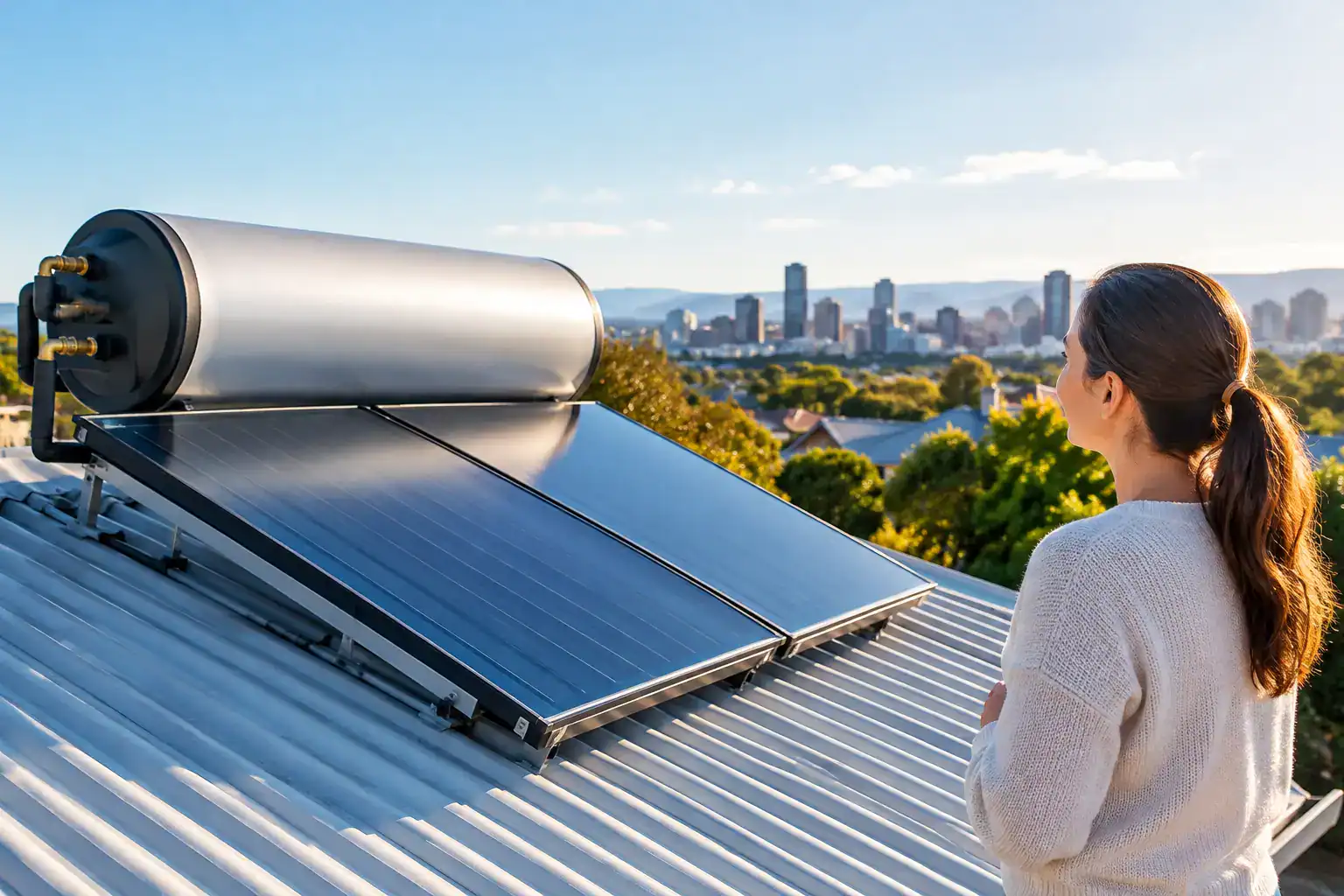
Solar hot water systems use the sun’s heat to warm water for your home. Solar collectors, usually mounted on the roof, absorb solar energy and transfer that heat to a storage tank. Depending on the system design, the tank may sit on the roof or at ground level.
Adelaide’s long, sunny periods make solar heating a practical option. However, every system also needs a booster to maintain reliable hot water through overcast weather, high-demand periods and cold winter mornings. That booster may be electric or gas, depending on the system and property setup.
A well-matched system can reduce the energy needed to heat water, but it should never be chosen on sunny-day performance alone. A good recommendation considers winter operation, the number of people in the household, bathroom use, laundry habits and when hot water is typically needed.
Is solar hot water right for your household?
Solar hot water can make sense for households with consistent hot water demand, particularly families using multiple bathrooms or properties where daytime sun exposure is strong. It can also appeal to homeowners who want a dedicated system that captures solar heat directly rather than using electricity to produce hot water.
That said, it depends on the property. A heavily shaded roof, limited north-facing roof area or ageing plumbing can affect suitability. So can your existing energy system. If you already have, or are planning, a quality solar PV system and battery storage, there may be another smart path to lower hot water costs.
An electric hot water unit can be scheduled to heat during the middle of the day, when your solar panels are generating. This allows surplus solar generation to support hot water use rather than being exported for a lower return. Heat pump systems can be especially efficient, although they require appropriate placement and their performance can vary with conditions and household demand.
The best choice is not about following a one-size-fits-all trend. It is about making your hot water system work with the rest of your home energy plan.
Direct solar heating versus solar PV for hot water
Solar hot water collectors and solar PV panels both use Adelaide sunshine, but they do different jobs. Solar thermal collectors heat water directly. Solar PV panels generate electricity that can power appliances across the home, including an electric or heat pump hot water system.
Direct solar hot water can be an efficient dedicated option. It may suit households that want to address hot water use specifically and have a suitable, unshaded roof. However, it is a more specialised setup. If household energy needs change, the system’s role remains focused on hot water.
Solar PV offers broader use. The electricity generated can support lighting, refrigeration, air conditioning, pool equipment, EV charging and hot water heating. When paired with a battery, it can also help households use more of their own solar energy after sunset. This flexibility is a major reason many Adelaide homeowners assess solar PV and hot water together rather than treating them as separate decisions.
What Adelaide conditions mean for system performance
Adelaide is well known for dry summers, high UV levels and plenty of clear days. These conditions can support strong solar production, but they also make correct design and installation essential.
Roof orientation matters, though a perfectly north-facing roof is not the only workable option. Available roof space, shading from trees or neighbouring buildings, roof pitch and the condition of the roof all need to be checked. A system should also be selected for the local climate, with a reliable boosting arrangement for winter and periods of sustained rain.
Regional properties can require additional consideration. Long pipe runs, larger households, multiple buildings and bore or tank water arrangements may change the best solution. Commercial sites are different again, as demand can be concentrated during business hours or spread across facilities. The right system starts with a site-specific assessment, not a generic recommendation.
Hot water usage habits matter more than most people think
Two homes with the same number of occupants can have very different hot water needs. A family with teenagers, regular laundry loads and consecutive morning showers may require considerably more capacity than a couple who use hot water mainly in the evening.
Timing matters as well. A solar PV-supported electric system is particularly attractive where water heating can be shifted into the sunniest part of the day. Some households can use timers or smart controls to make better use of solar generation, while still ensuring hot water is available when it is needed.
The aim is comfort first. Savings only count if the system is sized and configured to provide dependable hot water through every season.
Avoid choosing on headline savings alone
It is tempting to compare systems using a single promised saving figure. In reality, hot water outcomes depend on electricity tariffs, existing energy use, system efficiency, household habits, maintenance requirements and whether your solar generation is being used at home or exported.
A lower upfront option is not always the lower-cost choice over its working life. Likewise, a highly efficient product may not deliver its potential if it is poorly sized, incorrectly located or installed without regard for the home’s broader energy setup.
Homeowners should also be cautious of installers who treat a hot water decision as a quick add-on. Electrical work, roof work and system integration need to be completed properly by qualified trades. Compliance, product warranties and workmanship protection are not extras – they are central to protecting your property and your investment.
Build a complete home energy plan
For many South Australians, hot water is one part of a bigger decision: how to reduce reliance on grid electricity without compromising daily comfort. Solar panels remain the foundation for most homes, while battery storage can help retain more of the energy generated during the day. EV chargers, efficient appliances and controlled hot water heating can then work together to improve self-consumption.
This is where local experience matters. Adelaide homes range from character properties with complex roofs to new builds, rural homes and high-use family households. A recommendation should account for your current bills, future plans and the equipment already in place.
Allstate Solar helps South Australian households assess solar PV, battery and energy-use opportunities with fully licensed, accredited installation expertise. If your aim is to reduce the energy cost of hot water, it is worth looking at how that goal fits into a complete solar strategy rather than making a decision in isolation.
Questions to ask before you commit
Before selecting a hot water solution, ask how it will perform in winter, what energy source will provide boosting, how much hot water your household genuinely uses and whether the system can work with future solar or battery plans. You should also confirm who is responsible for installation, electrical connections, warranties and after-sales support.
If you are comparing solar hot water in Adelaide with a solar PV-powered alternative, ask for an assessment based on your actual home rather than a standard package. The right option should make sense on your roof, for your household and for the way you want to use energy in the years ahead.
A reliable hot water supply should be something you stop thinking about once it is in place. Start with a considered energy assessment, choose qualified local professionals and build a solution that keeps comfort high while putting more of Adelaide’s sunshine to work for your home.
No Comments