



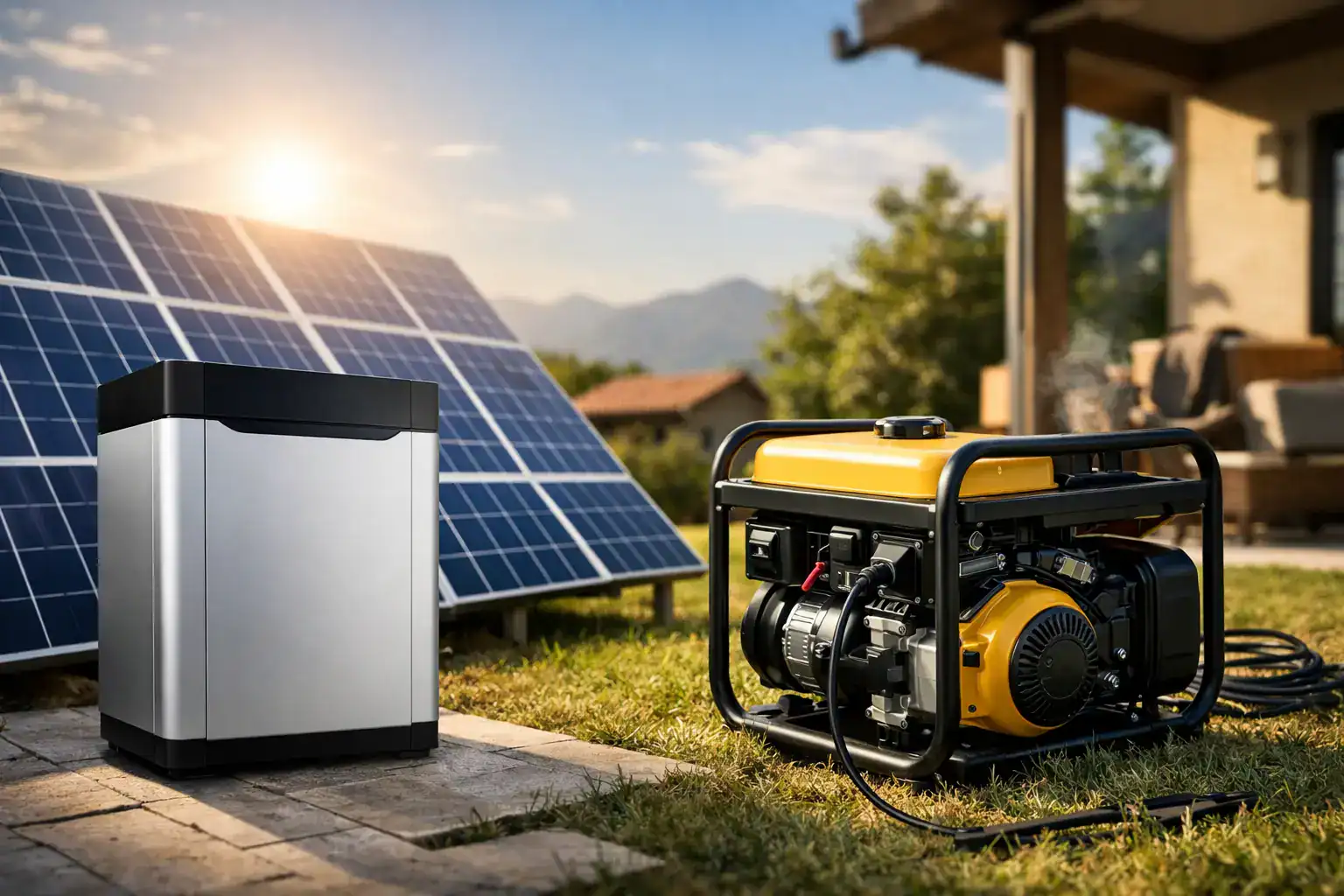
04 Aug Solar Battery vs Generator: Which Suits SA?
A summer storm has knocked out power, the fridge is warming up and the lights are out. For many South Australians, that is when the solar battery vs generator decision stops being theoretical. Both can keep essential appliances running, but they deliver backup power in very different ways – and the better choice depends on your property, energy habits and expectations during an outage.
For most grid-connected households with existing solar, a battery offers the more practical long-term solution. For remote properties, construction sites or situations where extended backup is essential regardless of sunshine, a generator may still have a clear role. The key is choosing a system designed for the way you actually use power.
Solar Battery vs Generator: The Key Difference
A solar battery stores electricity generated by your solar panels or drawn from the grid at selected times. When your home needs power later, the battery supplies it. With the right backup configuration, it can also keep nominated circuits operating when the grid goes down.
A generator creates electricity by burning fuel. It is usually started manually or automatically during an outage and continues to run while it has fuel. That makes it independent of sunlight, but it also means ongoing fuel use, servicing, noise and emissions.
Neither option is automatically right for every South Australian property. A battery is an energy-management asset used every day, while a generator is generally an emergency or occasional-use machine. That distinction matters when comparing value over the life of the system.
Why a Solar Battery Suits Many SA Homes
South Australia has strong solar conditions, and many homes already produce more solar energy than they can use in the middle of the day. Without battery storage, that excess is commonly exported to the grid. A home battery lets you retain more of that energy for the evening, when households often switch on cooking appliances, heating or cooling, lighting and entertainment.
This can reduce the amount of electricity you need to purchase from the grid. It also gives you greater control over when your solar power is used, rather than relying entirely on export arrangements and changing energy rates.
Quiet backup with no fuel runs
A battery operates quietly and automatically. There is no fuel container to store, no engine to start and no need to head out during a blackout to refuel. For suburban homes, this is a major advantage. It is also valuable for families who want backup power without the disruption, fumes or noise associated with a running generator.
When installed with a suitable backup gateway or changeover arrangement, a battery can support essential loads during an outage. Depending on the system design, that might include lighting, refrigeration, internet, selected power points and some appliances. The exact circuits and power available should be planned before installation, not assumed after the fact.
Daily savings as well as outage protection
A generator usually sits idle until there is a problem. A battery can work every day by storing solar energy, supporting evening use and, where appropriate, responding to tariff periods. That daily role is why batteries appeal to homeowners focused on lowering bills as well as improving resilience.
For eligible households, government-supported battery incentives may also improve the case for investing in storage. Eligibility, program requirements and system design all matter, so it pays to obtain advice based on your address, existing solar system and energy goals rather than relying on a generic estimate.
A better fit for EV charging and future energy use
Household electricity demand can grow over time. An electric vehicle, a larger family, a pool pump or more heating and cooling can all change the way a home uses energy. A properly sized battery system can be part of a broader plan that includes solar panels and EV charging, helping you use more of your own generation.
That does not mean a battery will power every appliance indefinitely during a blackout. High-demand equipment such as ducted air conditioning, electric hot water, ovens and large pumps can drain stored energy quickly. A quality design starts with the loads that matter most and sets realistic expectations about backup duration.
Where Generators Still Make Sense
Generators remain useful in specific circumstances, particularly on regional properties where outages can be longer and access to the grid may be less reliable. If a property needs to run equipment for extended periods, or has a large and variable electrical load, a generator can provide considerable flexibility as long as fuel is available.
They can also be useful as a secondary backup source for off-grid or hybrid systems. In this setup, solar and batteries handle normal daily demand, while a generator is available for prolonged cloudy weather, unusually high consumption or maintenance periods. This approach can be sensible where reliability is critical and grid power is not readily available.
The trade-offs: fuel, noise and maintenance
A generator is not a set-and-forget backup solution. Fuel needs to be safely stored and replaced as required. The unit must be serviced, tested and maintained so it is ready when needed. It also needs appropriate placement and ventilation, with consideration for noise, exhaust and neighbours.
During a widespread outage, fuel availability can become a practical concern. A battery charged by solar panels can continue to recharge during daylight, provided the system is specifically designed to operate in backup mode. Standard solar-only systems usually shut down during a grid outage for safety, so backup capability must be included in the system design.
Backup Power Is About Capacity and Power Output
One of the most common mistakes is comparing batteries and generators using only a single number. With batteries, stored energy capacity indicates how long a system may run. Power output indicates how much it can run at once. Both matter.
A battery may have enough stored energy to keep a fridge, lights, Wi-Fi and several power points running for many hours, but it may not be designed to start every high-load appliance at the same time. Likewise, a generator may offer high output but consume fuel quickly when supporting heavy loads.
Your installer should assess your usual consumption, essential circuits, solar production and blackout priorities. For a family home, keeping food cold, communications active, lights on and selected appliances available may be the priority. For a business, the focus may be protecting refrigeration, security systems, communications, point-of-sale equipment or critical processes.
Choosing the Right Option for Your Property
A solar battery is generally the stronger choice if you want to use more of your solar power, reduce reliance on the grid and have quiet backup for essential circuits. It is particularly well suited to grid-connected SA homes where daily energy savings are just as important as occasional outage protection.
A generator can be the better fit if your property is remote, requires long-duration backup for larger loads or needs an independent fuel-based contingency. It may also complement an off-grid or hybrid solar setup where a second source of charging provides extra assurance through extended poor weather.
For some regional properties and commercial sites, the answer is not strictly one or the other. A professionally designed hybrid system can combine solar generation, battery storage and generator backup to match the site’s reliability requirements. The right configuration depends on what must stay running, how long it must run and how much energy the site uses each day.
Get the System Design Right From the Start
The quality of the installation and advice matters as much as the equipment selected. Battery storage and backup systems involve electrical safety, switchboard considerations, system compatibility and careful load planning. A system should be installed by qualified, accredited professionals who can explain exactly what will operate during an outage and how the system will perform day to day.
Allstate Solar helps South Australian homeowners, regional property owners and businesses assess solar, battery and hybrid energy options based on practical outcomes, not guesswork. From premium battery options to backup planning and rebate guidance, the objective is a solution that suits your property and delivers lasting value.
If power security and lower energy bills are both on your list, start with an assessment of your essential loads and current solar use. A well-designed battery system can make every sunny day work harder for your home or business – and give you greater confidence when the grid does not.
No Comments