



23 Sep Your Solar Battery Safety Questions Answered
A home battery should give your household greater control over rising energy costs, not create another worry. The most common solar battery safety questions are sensible ones: Can it catch fire? Where can it be installed? Is it safe in Adelaide heat? What happens in a blackout? Clear answers start with one principle – battery safety depends on the product, the system design and the quality of the installation.
For South Australian homes, regional properties and businesses, a professionally selected and installed battery system is designed to operate safely for years. The key is choosing an experienced, accredited installer who assesses the whole site, not simply a spare patch of wall.
Solar Battery Safety Questions About Fire Risk
Lithium-based batteries, including popular home battery systems from Tesla and BYD, store a significant amount of energy in a compact unit. Like any major electrical equipment, they must be installed, protected and maintained correctly. The risk is not zero, but serious battery incidents are uncommon when approved equipment is installed to the applicable Australian standards, manufacturer requirements and local regulations.
The concern people often hear about is thermal runaway. This is a chain reaction caused when a battery cell overheats or is damaged, potentially leading to smoke, fire or gas release. Quality battery systems are designed with layers of protection to reduce this risk. These can include battery management systems, temperature monitoring, internal isolation, fault detection and automatic shut-down functions.
Those built-in safeguards are only part of the picture. Correct cable sizing, secure connections, suitable circuit protection and a compliant location all matter. A cheap or poorly planned installation can compromise even a good battery. That is why the installer’s electrical expertise is every bit as important as the battery brand on the wall.
If you ever see smoke, smell burning, hear unusual sounds or receive a serious fault alert from your battery, stay clear of the equipment and call emergency services on 000. Tell the operator there is a home battery energy storage system on site. Do not open the battery, pull apart wiring or try to investigate the source yourself.
Where Is the Safest Place for a Solar Battery?
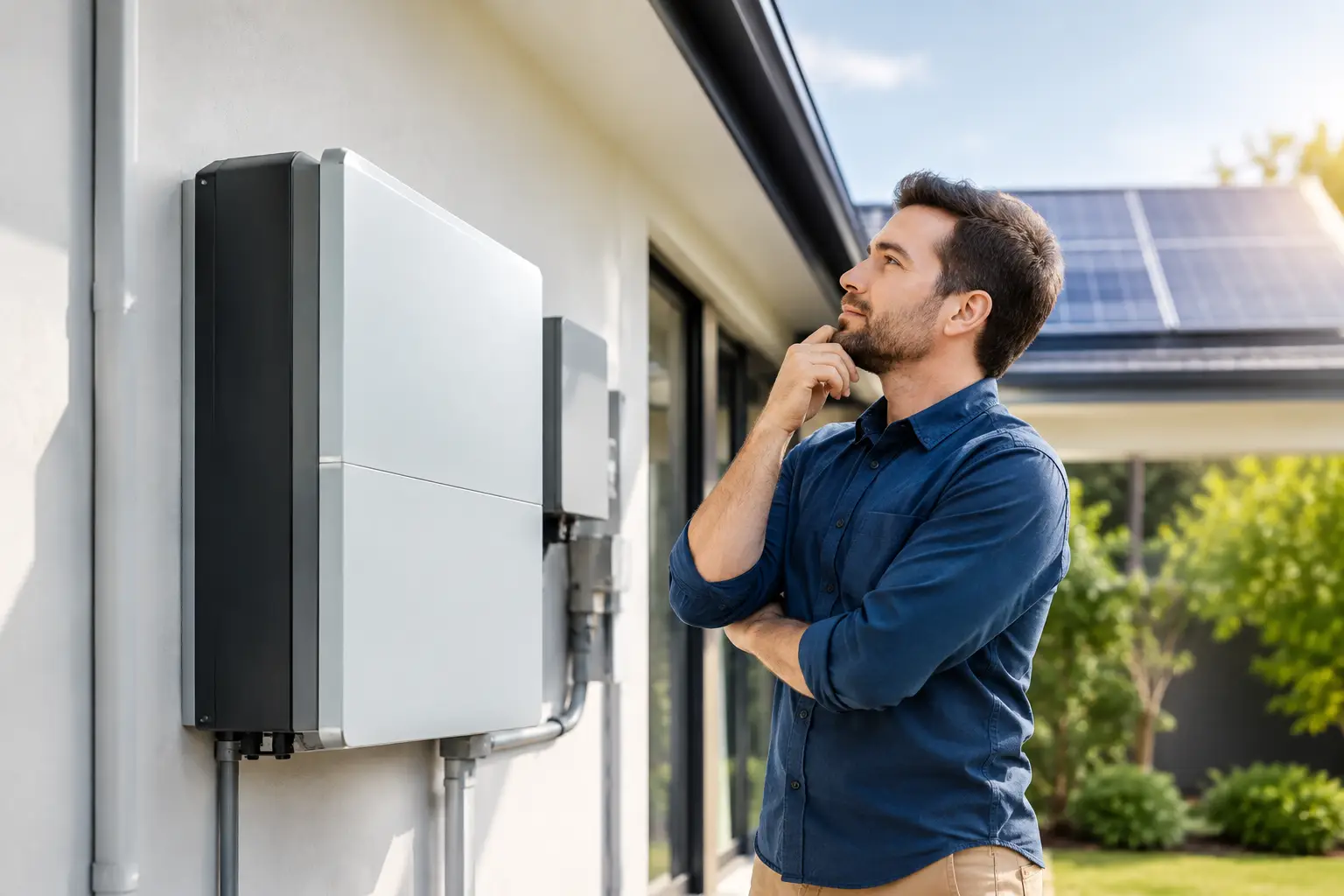
There is no single answer that suits every South Australian property. A battery may be installed in a garage, on an external wall or in another approved area, provided the location meets the relevant requirements and the manufacturer’s instructions. The right position depends on the property layout, available clearances, access, heat exposure, flood risk and proximity to doors, windows, pathways and other equipment.
A good site assessment considers far more than convenience. Batteries need appropriate ventilation around the unit, protection from avoidable physical damage and clear access for servicing or emergency response. They should not be boxed into a cramped cupboard, surrounded by stored belongings or installed where a vehicle can easily strike them.
In Adelaide and regional SA, heat deserves particular attention. Many modern batteries are engineered for outdoor conditions, but direct western sun can still affect performance and long-term operation. Where practical, a qualified designer will consider shade, weather protection and airflow without restricting the clearances the manufacturer requires.
Water is another site-specific issue. A battery location should account for roof run-off, stormwater paths and potential flooding. This is especially relevant on rural blocks, sloping sites and properties with exposed external walls. A thorough installer will identify these risks before the system is fitted, rather than solving them after the fact.
Is a Battery Safe in a Garage?
A garage can be a suitable location, but it is not automatically the right one. The battery must have the required separation from other parts of the home and enough room around it. It also needs protection from cars, trailers, bikes, tools and the everyday movement that comes with a busy family garage.
If your garage doubles as a storage room, be realistic about how the space is used. Stacking boxes, paint tins, fuel containers or garden equipment around electrical equipment is never a good idea. Keep the battery area clear and make sure everyone in the household knows it is not a shelf or storage zone.
For homes without a suitable garage location, an external installation may be the better solution. The decision should be based on safety, compliance and system performance, not simply on hiding the equipment from view.
What Makes a Battery Installation Safe?
Safe battery storage is a complete system outcome. It is not achieved by purchasing a recognised battery name alone. Before installation, a qualified team should assess your switchboard, solar inverter, household demand, backup requirements and the physical site.
A well-planned system includes several practical safeguards:
- Approved battery and inverter equipment suited to the intended application.
- Correctly rated wiring, isolation points and electrical protection devices.
- A location that allows required clearances, access and appropriate protection from heat, impact and water.
- Clear labelling so emergency responders and electricians can identify the system.
- Testing, commissioning and customer handover before the system is put into normal operation.
The exact setup varies. A household wanting essential blackout backup may need a different design from a business managing daytime loads, or a regional property running a hybrid or off-grid arrangement. Trying to use a one-size-fits-all package can leave gaps in either performance or safety.
Do Solar Batteries Need Maintenance?
Most modern home batteries are sealed systems and do not require homeowners to carry out internal maintenance. In fact, opening a battery enclosure or attempting a repair yourself can be dangerous and may affect warranty cover. Your role is simpler: keep the area clear, pay attention to system alerts and arrange professional support if something does not look right.
Check the monitoring app or portal from time to time. A sudden change in performance, repeated warnings, an unexplained shutdown or visible damage should be investigated by a qualified technician. Do not ignore alerts simply because the solar panels are still producing power.
It is also sensible to inspect the surrounding area after major storms, extreme heat or building work. Look for water pooling, physical impact, loose covers or new objects blocking ventilation. On regional properties, keep an eye out for pest activity near cabling and equipment. If you are unsure, leave the inspection to a professional rather than touching electrical components.
Are Batteries Safe During a Blackout?
Yes, when the system has been designed for backup operation and commissioned correctly. However, not every solar battery automatically powers the home during an outage. Some systems are configured primarily to store solar energy and reduce grid use, while others can supply selected circuits or broader backup power.
This distinction matters for safety as well as convenience. During a blackout, your solar system must not send electricity back into the grid, where it could endanger network workers. Properly configured battery backup systems isolate from the grid and operate within their designed backup limits.
Before installation, decide what you want to keep running. For many homes, that may be lighting, refrigeration, internet, selected power points and essential medical or security equipment. High-demand appliances may require a larger battery, specific backup design or a more considered approach to energy use during an outage.
Ask your installer to explain exactly what will and will not operate when the grid goes down. It is far better to understand that before a summer storm tests the system.
Questions to Ask Before You Choose a Battery Installer
The right conversation should go beyond battery capacity and expected bill savings. Ask whether the installer is licensed and accredited, how they assess battery placement, what backup capability is included, and how the system will be tested at handover. You should also ask who will support you if an alert appears after installation.
For South Australians considering a battery rebate or Virtual Power Plant participation, confirm how those choices affect the proposed system design and your access to stored energy. The best option depends on your household goals, electricity use and appetite for grid participation. A clear explanation is a sign that the recommendation is being tailored to you.
Allstate Solar designs and installs battery systems with the site, the household and the long-term result in mind. If you have solar battery safety questions about your own property, speak with a qualified local team before choosing equipment or a location. A careful assessment now is the practical way to enjoy cleaner power, dependable backup and greater peace of mind for years ahead.
No Comments