



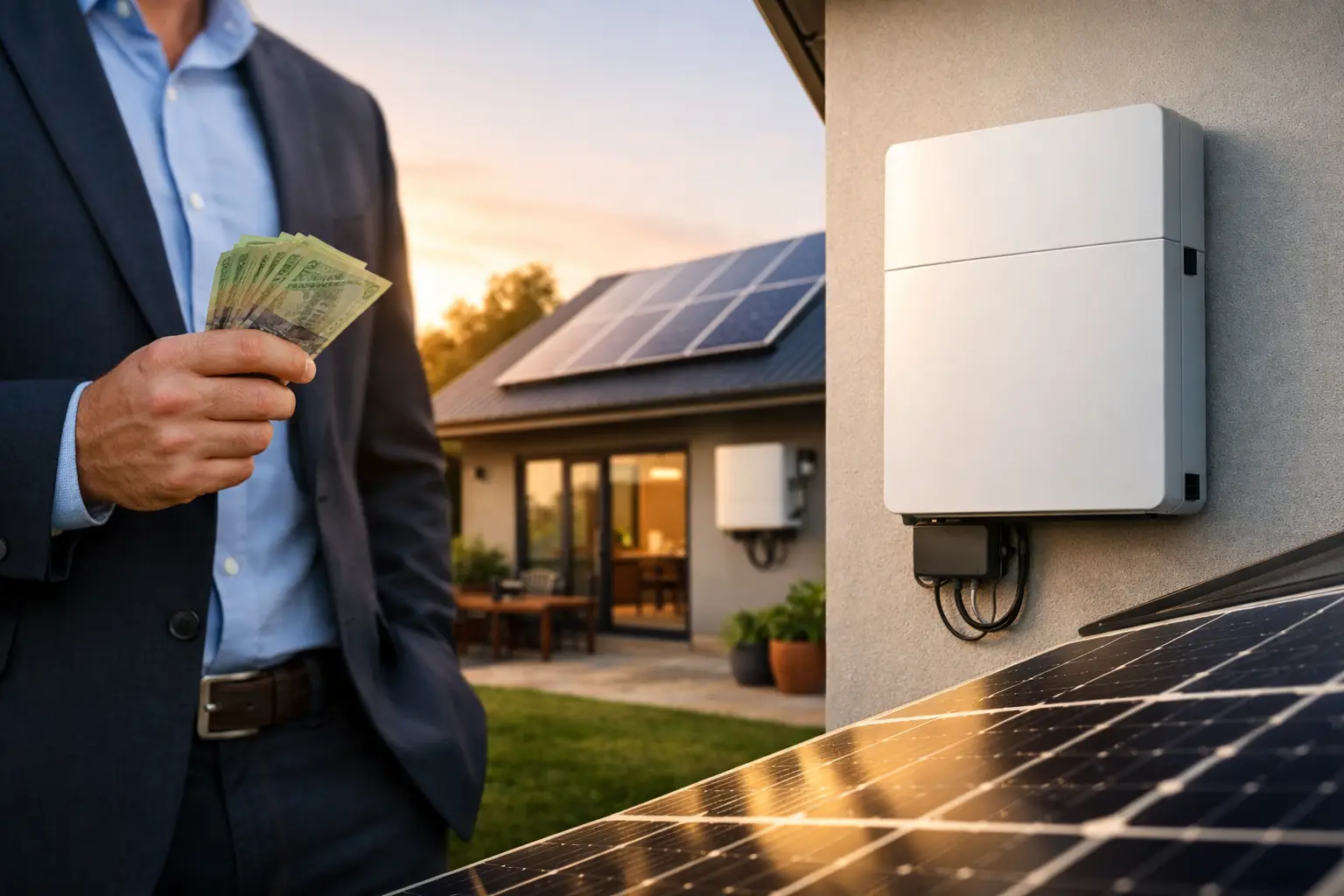
17 Jun SA Home Battery Scheme Government Subsidy
If you have been putting off battery storage because the upfront cost felt too high, the SA home battery scheme government subsidy is probably the first place to look. For South Australian households, it can make the step into battery storage far more achievable – but only if the system, installer and application process are handled properly from the start.
A battery rebate always sounds simple in the headline. In practice, eligibility, product choice, installer accreditation and property needs all matter. That is why homeowners who get the best result usually start with a proper assessment, not just a sales pitch.
What the SA home battery scheme government subsidy is meant to do
The SA home battery scheme government subsidy was designed to help more South Australians store their solar energy instead of sending it back to the grid for a lower feed-in return. In plain terms, it supports households that want to use more of the power they generate, rely less on expensive evening electricity, and build better protection against rising energy costs.
That matters in South Australia because plenty of homes already have solar panels. The next question is often not whether solar works, but how to get more value from it. A battery can shift stored energy into the hours when your household actually needs it most, especially after sunset when grid power is usually at its most expensive.
For some properties, the benefit is mostly bill reduction. For others, it is about backup capability, energy independence or making an EV charging setup more efficient. The right outcome depends on how and when you use electricity.
Who may benefit most from the subsidy
Not every home sees the same return from a battery, even with a rebate attached. Households that tend to use a lot of power in the late afternoon and evening are often in a stronger position. Families running air conditioning after work, homes with pool pumps, people charging an electric vehicle overnight, and regional properties wanting greater resilience can all have solid reasons to consider battery storage.
Homes with an existing solar PV system are often the most obvious fit, because the battery can store excess daytime generation that would otherwise be exported. New solar-and-battery packages can also make sense where the system is being designed together rather than retrofitted later.
There is also a practical difference between wanting the cheapest battery option and wanting a battery that performs properly over time. The best long-term value usually comes from pairing a well-sized system with quality products and an experienced, fully accredited installer.
How the SA home battery scheme government subsidy usually works
Most homeowners want a straight answer here, and fair enough. The basic idea is that eligible battery systems may receive financial support that reduces the upfront purchase cost, subject to the rules of the program at the time of application.
The details can vary. Eligibility may depend on factors such as where the property is located, whether the home meets the scheme criteria, whether approved battery products are used, and whether the installation is completed by a qualified provider. Program settings can also change over time, which is why current advice matters.
This is where people often come unstuck. They assume any battery on any property qualifies, then find out too late that the product, paperwork or installer does not line up with the scheme requirements. A proper pre-installation check helps avoid that problem.
Why installer choice matters more than most people realise
A government subsidy only helps if the project itself is sound. Battery storage is not a plug-and-play appliance. It needs to be designed around your solar production, switchboard setup, household usage patterns and future plans.
That is why installer quality matters so much. A fully licensed and accredited team can help confirm whether your property suits battery storage, whether the selected system aligns with current rebate pathways, and whether the installation will deliver the result you are actually after.
For South Australian homeowners, local experience matters as well. Conditions in metro Adelaide can differ from those on regional properties, and homes with older electrical infrastructure need careful assessment. Getting it right the first time is worth more than chasing a headline figure and hoping for the best.
Choosing the right battery under the SA home battery scheme government subsidy
The SA home battery scheme government subsidy should not be the only reason you choose a battery. It is a financial incentive, not a guarantee that every system is a smart fit for every home.
A good battery recommendation should consider usable capacity, compatibility with your solar setup, warranty support, monitoring features, and whether you want backup power capability. Brand quality also matters. Recognised systems such as Tesla Powerwall and BYD battery options are popular for a reason – they are trusted products with strong market recognition and proven performance in the right application.
Size is one of the biggest judgement calls. Too small, and the battery may empty early and leave savings on the table. Too large, and you may pay for storage capacity you rarely use. The best result usually comes from matching the battery to your actual usage, not just the largest unit that fits the brochure.
What homeowners should check before applying
Before moving ahead, it is worth slowing down and checking the fundamentals. First, make sure your home is genuinely suited to battery storage. A battery works best when it has enough solar generation to charge effectively and enough evening demand to discharge usefully.
Second, check whether your existing solar system is compatible or whether upgrades may be needed. Some older systems can still work well with battery integration, but not all setups are equal.
Third, ask how the application process is managed. Rebate programs involve documentation, approvals and timing. If that process is handled poorly, delays and frustration follow quickly. A service-led installer should be able to guide you through the paperwork clearly and confidently.
Finally, think beyond the rebate itself. If your goal is lower bills, ask for realistic modelling. If your goal is backup protection, ask what circuits can be supported. If your goal is long-term energy independence, ask how the system could expand later with EV charging, VPP participation or a larger solar setup.
It depends on your home, not just the scheme
This is the part that often gets missed in generic articles. A subsidy can improve the numbers, but it does not remove the need for proper system design. A battery can be an excellent investment for one household and only a modest improvement for another.
For example, a home that exports plenty of unused solar in the middle of the day may be a strong candidate. A household with very low power use, limited roof generation or minimal evening demand may need a different strategy. Regional properties might value resilience more highly than simple payback. Commercial sites can have a completely different load profile again.
That is why a site-specific recommendation matters. The scheme should support a good decision, not replace one.
Why South Australians are still moving on batteries
Even where rebate settings change over time, battery interest in SA remains strong because the underlying drivers have not gone away. Grid prices are still a concern. Energy independence still matters. Families still want more control over when and how they use their own solar generation.
There is also a confidence factor. People are increasingly comfortable with battery technology when it is supplied and installed by an experienced team with the right licensing, accreditations and insurance behind the job. That trust matters, especially for customers who want a premium system and a clean installation without shortcuts.
For households already thinking about solar upgrades, EV charging or Virtual Power Plant participation, battery storage can also become part of a bigger energy plan rather than a standalone purchase.
Getting the process right from day one
If you are considering the SA home battery scheme government subsidy, the smartest move is to start with advice that reflects your property, your usage and the current program rules. A rushed quote can miss important details. A proper consultation gives you a clearer path.
At Allstate Solar, we work with South Australian homeowners who want proven battery solutions, end-to-end installation support and practical guidance on available rebate pathways. If you want to apply for the battery rebate scheme, contact us today and speak with a local team that knows how to get the job done right.
The real opportunity is not simply claiming a subsidy. It is turning that support into a battery system that actually performs for your home, year after year.
No Comments