



31 Jul Hybrid Solar Versus Off Grid: Which Fits?
A solar system can cut daytime power costs, but the right design also determines what happens when the grid goes down, your battery is low, or a long run of cloudy weather arrives. When weighing up hybrid solar versus off grid, the central question is not which system is better in theory. It is which system matches your property, energy habits and expectation of power security.
For many South Australian households, a hybrid system offers the most practical balance of savings and backup. For remote homes, sheds, pumps and regional properties without a dependable network connection, an off-grid system can be the right long-term solution. Both need careful design by licensed, accredited installers. A system that looks good on paper but is undersized for winter use or critical loads can quickly become a costly frustration.
Hybrid solar versus off grid: the key difference
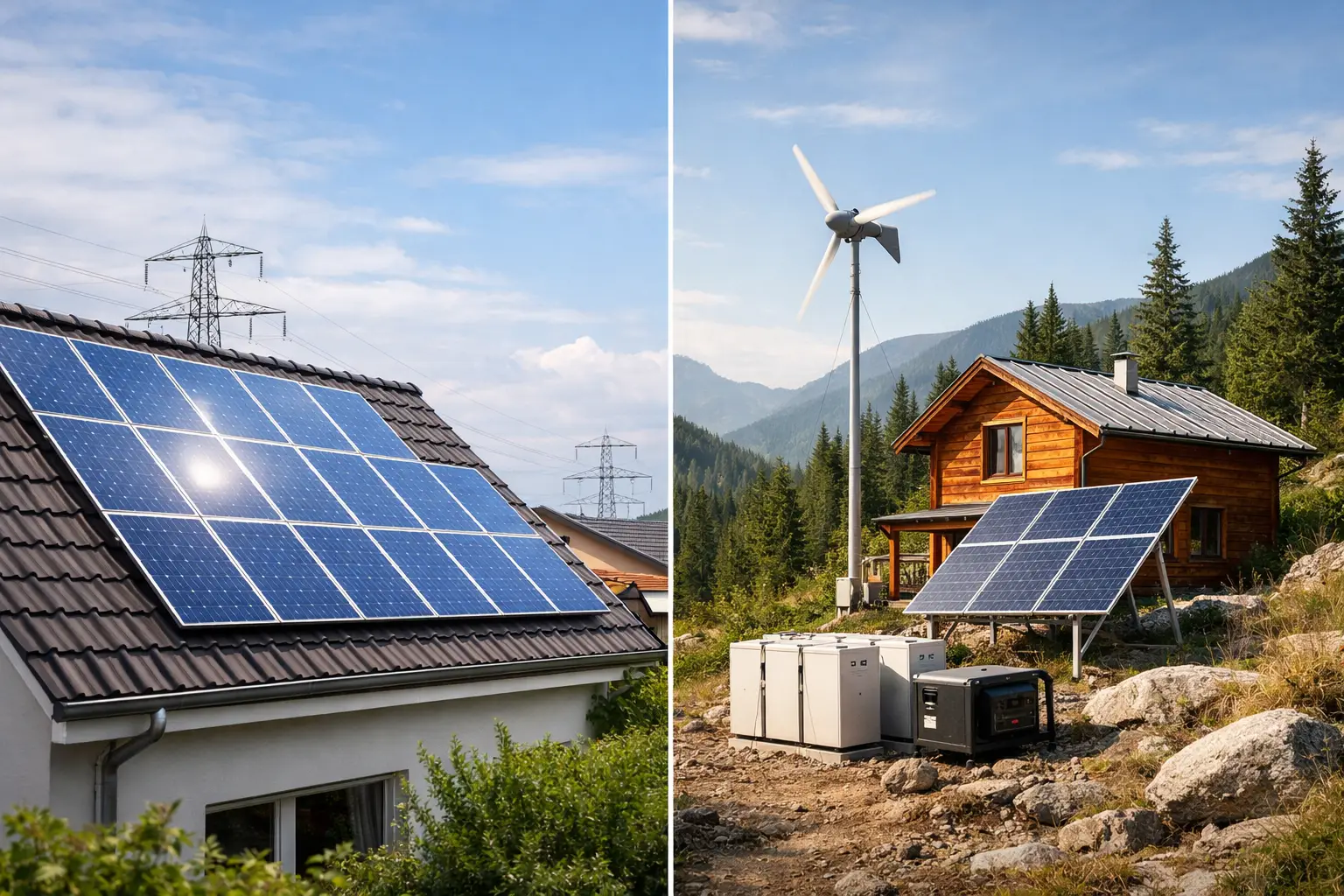
A hybrid solar system remains connected to the electricity grid while combining solar panels with battery storage. During sunny periods, your panels run household appliances and charge the battery. Any surplus can be exported to the grid, subject to your retailer arrangement. At night or when solar production drops, your home can draw from the battery and then the grid if required.
An off-grid solar system has no grid connection. It must generate, store and manage enough electricity to operate the property through every season. That usually means a larger solar array, more battery capacity, a carefully selected inverter and, in many cases, a backup generator for prolonged poor weather or unusually high demand.
The difference sounds simple, but it changes the way the whole system is designed. A hybrid system has the grid as a safety net. An off-grid system must be its own power station.
When a hybrid solar system makes sense
Hybrid solar suits many metro and regional South Australian homes that already have a grid connection and want to reduce reliance on rising electricity bills without giving up the convenience of mains power. It is particularly appealing for families who use a lot of energy outside daylight hours, such as households running air conditioning, pool equipment, electric cooking or EV charging.
A battery can store excess solar energy for use after sunset, rather than exporting all of it for a lower credit. It can also provide backup power during a blackout, provided the system is designed with backup capability and the chosen loads are included in the backup circuit. This is an important distinction. Not every battery system automatically keeps every appliance running during an outage.
For most homes, the grid-connected hybrid approach is more forgiving. If several overcast days coincide with heavy electricity use, the property can still import power from the grid. That allows the system to be sized around typical consumption and savings goals, rather than the most demanding day of the year.
Hybrid systems are built around energy control
The strongest hybrid designs start with how the household actually uses electricity. A family that is home during the day may prioritise solar production for appliances and EV charging. A household that is empty until late afternoon may gain more value from battery storage. Businesses may focus on reducing daytime operational demand, while also protecting selected equipment from outages.
Monitoring also matters. A quality hybrid system gives owners visibility over solar generation, battery charge and household consumption. Those insights help identify waste and build better habits, such as timing high-use appliances to run when solar production is strongest.
When off-grid solar is the better answer
Off-grid solar is designed for properties where a grid connection is unavailable, impractical or unreliable. This may include remote homes, rural blocks, workshops, accommodation sites, pumping systems or regional businesses where extending network infrastructure would be disruptive or difficult.
The appeal is genuine energy independence. You are not exposed to grid outages in the same way as a connected home, and there are no ongoing grid supply charges. But independence comes with responsibility: the system must have enough generation and storage to meet demand all year, not just during bright summer conditions.
In South Australia, winter solar production and consecutive cloudy days must be considered from the outset. So must seasonal changes in energy use. A property may need more power in summer for cooling, while winter can bring shorter daylight hours, heating loads and reduced solar yield. Water pumps, refrigeration, workshop tools and electric hot water can dramatically change the required capacity.
Off-grid design leaves little room for guesswork
A successful off-grid system begins with a detailed load assessment. This identifies what equipment runs, how long it runs, when it runs and whether its use can be shifted to daylight hours. The goal is not to make residents compromise on every appliance. It is to engineer a reliable system around realistic needs.
Battery capacity provides overnight energy and a buffer for poor weather. Solar panels recharge that storage, while the inverter manages power delivery to the property. A backup generator can add another layer of resilience. It is not a failure of the solar system. It is practical insurance for exceptional weather, equipment servicing or periods of unusually high demand.
Trying to reduce system capacity too far can create the wrong kind of independence: constant monitoring, unnecessary generator use and limits on ordinary living. Proper system design puts reliability first.
Backup power: what do you need to keep running?
Backup expectations are often where homeowners discover the biggest difference between a standard solar installation and a properly planned hybrid or off-grid solution. During an outage, you may want essentials such as lighting, refrigeration, internet, selected power points, security systems and a garage door to remain available. Some properties may also need medical equipment, water pumps or business-critical loads covered.
A hybrid system can be configured to back up selected circuits or, where suitable, support a broader portion of the home. The best choice depends on battery capacity, inverter capability and the loads you expect to run at the same time. High-demand appliances, including ducted air conditioning, ovens and large pumps, require particular attention.
Off-grid systems must cover these decisions every day, not only during blackouts. That makes load management essential. Efficient appliances, sensible operating schedules and an understanding of high-draw equipment are part of reliable off-grid living.
Batteries are not all the same
Battery storage is a major part of both options, but capacity alone is not the full story. The usable energy capacity, power output, warranty, temperature operating range, inverter compatibility and backup functionality all influence real-world performance.
Premium battery solutions, including Tesla Powerwall and BYD battery systems, can suit different property requirements when matched with the right solar and inverter design. The right battery is the one that supports your energy goals, accommodates your household load profile and can grow with future needs where expansion is practical.
For example, an EV may be part of your plans even if you do not own one yet. A growing family, home office, renovated shed or new pool can also shift electricity use significantly. Raising these plans before installation is far easier than redesigning a system after the fact.
Rebate eligibility and local installation quality
Government-backed incentives can make solar and battery investment more accessible for eligible South Australians, but programs and eligibility requirements can change. It is worth getting clear advice before you commit, including how the proposed system is configured and what documentation is required.
Just as important is installer quality. Solar and battery systems involve high-voltage electrical work, roof safety, switching equipment, battery placement and compliance requirements. Choosing a fully licensed, accredited team with strong local experience helps protect your investment and ensures the system is designed for South Australian conditions rather than copied from a generic template.
Allstate Solar works with homeowners, regional property owners and commercial clients to assess practical energy needs before recommending a hybrid or off-grid solution. The aim is straightforward: a system that delivers dependable performance, not one sized around a headline figure alone.
How to choose between hybrid and off-grid
Start with your existing grid connection. If you have reliable mains power and your priority is lower bills, greater self-consumption and blackout protection, hybrid solar is usually the logical path. It gives you solar and battery benefits while retaining the grid as backup.
If your property is remote or network supply is not viable, off-grid solar may be essential. In that case, the design needs to account for seasonal generation, battery autonomy, critical loads and generator backup from day one.
Your appetite for energy management is also relevant. Hybrid owners can generally use electricity more freely because the grid remains available. Off-grid owners gain independence but benefit from being more deliberate about when they run major loads. Neither approach is automatically right for every property.
The most useful next step is a site-specific assessment that considers your bills or expected loads, roof or ground-mount options, shading, switchboard requirements, battery location and future plans. Contact a qualified local solar team to discuss what you need to keep running, what you want to save and how much independence your property genuinely requires. The right answer should leave you confident when the sun is shining and when it is not.
No Comments