



19 Jun How Residential Solar Installation Works
A good solar system is planned long before the first panel goes on your roof. If you are wondering how residential solar installation works, the short answer is this: your home, usage, roof layout and future energy needs are assessed first, then the system is designed, installed, tested and connected so it performs properly from day one.
That process matters more than many homeowners realise. In South Australia, solar can deliver excellent results, but only when the system suits the property. Roof pitch, shade, switchboard condition, daytime usage and whether you want battery storage or EV charging all affect the final design. The goal is not just to get panels on the roof. It is to build a system that reduces power bills and keeps delivering value for years.
How residential solar installation works from first inspection to switch-on
The first step is usually a site assessment and consultation. This is where an experienced installer looks at your power usage, roof space, orientation and any constraints on the property. A north-facing roof is often ideal, but east and west aspects can still work well depending on when your household uses the most electricity.
Your electricity bills help shape the design. A family that is home during the day will often benefit from a different setup than a household that is empty until late afternoon. If you plan to add a battery, run an air conditioner more often, or install an EV charger later, that should be factored in early. It is easier to design with those goals in mind than to retrofit around them.
The roof inspection also checks practical installation details. Tile, tin and other roof types each require a different approach. Installers need to confirm there is enough suitable space, that access is safe, and that shading from trees, neighbouring buildings or antennas will not compromise output too heavily. In some homes, the switchboard also needs attention before solar can be connected safely.
System design is where performance is decided
Once the property has been assessed, the system is designed around your household. This includes the number of panels, the inverter size, panel placement and whether battery storage is included. It may sound straightforward, but this stage has a major effect on long-term results.
Panels produce direct current electricity, while your home uses alternating current. The inverter is the component that converts that energy into usable power for the home. In a battery-ready or battery-inclusive setup, the design may also account for how excess solar energy is stored and later discharged when the sun goes down.
This is also where trade-offs come in. A larger system may generate more electricity overall, but only if the roof can support efficient panel placement and your usage profile justifies it. A battery can improve self-consumption and backup capability in some setups, but it is not automatically the right choice for every household. The right advice should be based on your property and goals, not a one-size-fits-all package.
For South Australian homeowners, rebate and incentive eligibility can also shape the timing and configuration of a system. If you are considering a home battery as well as solar, it makes sense to plan the two together rather than treating battery storage as an afterthought.
What happens on installation day
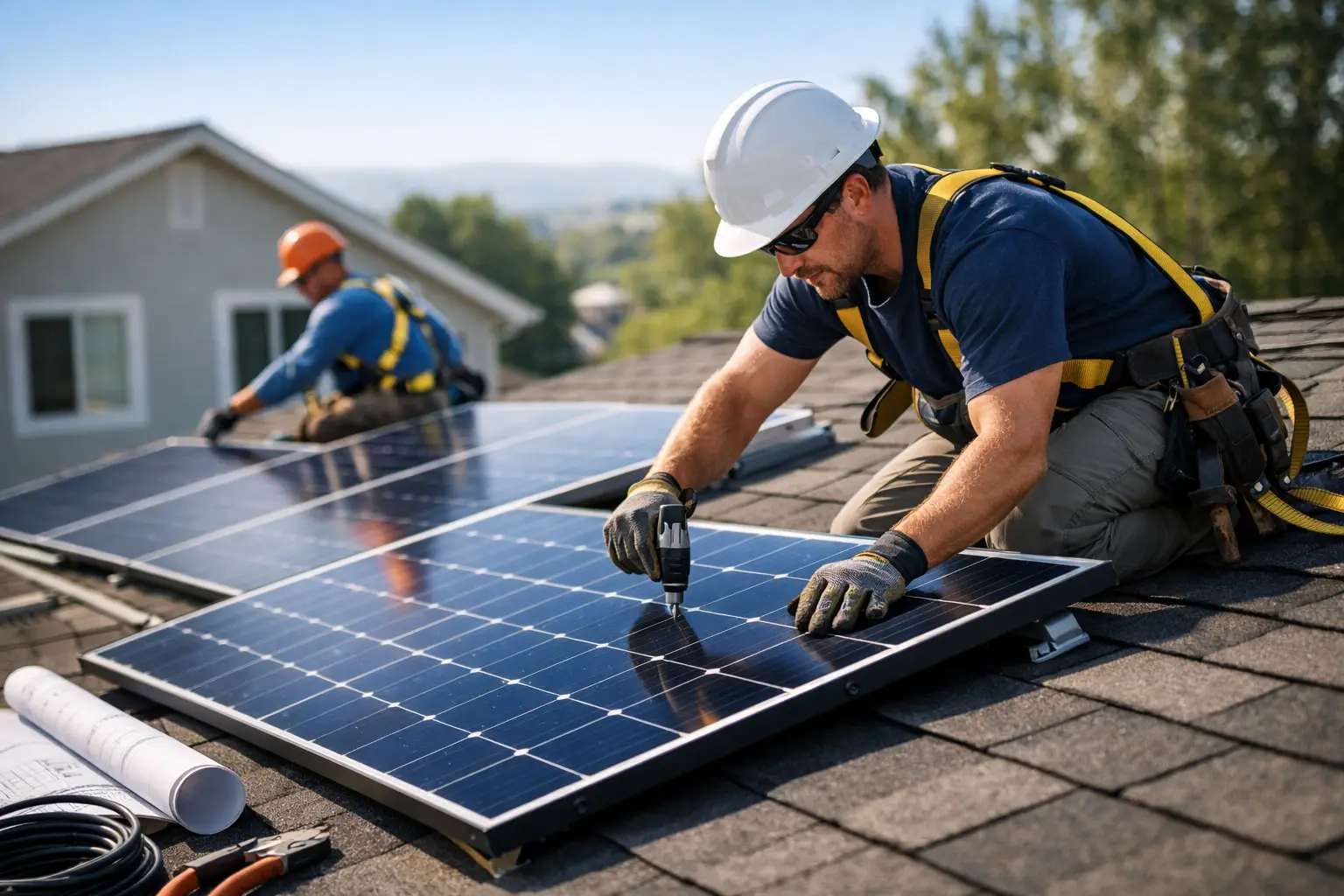
Once approvals, design and scheduling are in place, the physical installation begins. Most residential installs are completed within a day or two, depending on system size, roof complexity and whether additional electrical work is required.
The roof crew starts by installing the mounting system that secures the panels in place. This needs to be done carefully to suit the roof type and protect the building envelope. The panels are then fixed to the mounting rails and wired together in strings according to the system design.
At the same time, the electrical team installs the inverter and any required safety components. If the job includes a battery, backup gateway or EV charger, those elements are integrated as well. Cabling is run neatly and safely, and the system is connected back to the switchboard in line with Australian standards.
This is why licensed, accredited trades matter. Solar is not just a product purchase. It is electrical infrastructure being added to your home. The quality of the install affects safety, reliability and performance. A properly installed system should look tidy, operate efficiently and comply with all relevant requirements.
Testing, compliance and grid connection
After installation, the system is tested before it is switched on fully. The installer checks that the wiring, inverter, isolators and generation figures are all behaving as expected. Labels, shutdown procedures and compliance requirements also need to be completed correctly.
Grid connection is the final part many homeowners do not see. Your system needs approval to export excess power back to the grid, and in some cases a meter change or reconfiguration is required. Until that is completed, the system may not be able to operate at full export capacity.
This is one reason an end-to-end installer adds real value. Managing the paperwork, coordination and technical compliance can save time and prevent frustrating delays. For busy households, having one experienced local team handle the process is often the difference between a smooth installation and a drawn-out one.
How your home uses the solar energy
Once your system is running, solar power is used by the home first. If your panels are producing electricity during the day, your house will draw from that generation before importing from the grid. That is where the bill savings begin.
If the system generates more than the home is using at that moment, the excess can either be exported to the grid or stored in a battery if one is installed. Later in the evening, when panel production stops, your home then draws from the battery or the grid depending on your setup.
The biggest savings usually come from using more of your solar power on site. That may mean running appliances, pool pumps, dishwashers or charging an EV during solar production hours where practical. A well-designed system supports those habits rather than forcing you to change everything about how you live.
Where batteries fit into the picture
A battery is not essential for every solar installation, but it can be a strong option for households that want greater energy independence or better evening usage coverage. In South Australia especially, many homeowners are looking beyond panels alone and thinking about how to store more of what they generate.
When a battery is included, excess daytime solar can be stored instead of sent straight back to the grid. That stored energy can then be used after sunset, during peak tariff periods, or in some systems during outages if backup functionality is included.
Battery suitability depends on your usage pattern, existing solar setup and future plans. If you are home more in the evening than during the day, or you want to pair solar with an EV charger, battery storage may make more sense. If your daytime self-consumption is already high, the equation can look different. Good advice here should be practical, not pushy.
What can affect installation outcomes
Not every home gets the same solar result, even with similar panel counts. Shade is one of the biggest variables. A few hours of morning or afternoon shading may be manageable, but heavy year-round obstruction can reduce performance significantly.
Roof condition matters too. If the roof needs repair soon, it is better to address that before panels go on. Switchboard compliance is another common issue in older homes and regional properties. These are not deal-breakers, but they do need to be handled properly.
Then there is system sizing. Bigger is not always better if it leads to poor panel orientation or unnecessary oversupply. The best system is the one that fits the property, household usage and long-term goals. That includes future-proofing where needed, especially if battery storage or EV charging is likely down the track.
Why the installer matters as much as the equipment
There is no shortage of solar products on the market, but the installer is what turns equipment into a working energy system. Design accuracy, workmanship, compliance, safety and after-install support all come back to the quality of the team doing the job.
That is why many South Australian homeowners look for an established local provider with accredited installers, strong review history and experience across residential, battery and hybrid systems. It is reassurance that the advice will be grounded in real site conditions, local requirements and proven installation standards. With a company such as Allstate Solar, the focus is on getting the job done right the first time and making the process clear from consultation through to connection.
If you are thinking about solar for your home, the smartest first step is not chasing the biggest system or the loudest sales pitch. It is getting advice tailored to your roof, your usage and your plans for the next several years, because that is how solar becomes a solid household upgrade rather than just another quote.
No Comments