



13 Jul Home Solar Installation Process in South Australia
A quality solar system should start delivering value long before the panels go on your roof. The home solar installation process begins with understanding how your household uses electricity, what your property can support and whether a battery, EV charger or future upgrade should be part of the plan. For South Australian homes, getting those early decisions right is how you avoid an undersized system, poor panel placement or a setup that cannot keep up with changing energy needs.
At Allstate Solar, the focus is on designing and installing a solution that suits the property, the household and the long-term goal – whether that is reducing daytime power bills, adding battery backup capability or making better use of solar generation.
1. Start with your energy goals
Before selecting panels or comparing system sizes, consider what you want solar to achieve. A family that is usually out during the day has different needs from a household with someone working from home, a pool pump running daily or an electric vehicle charging overnight.
Your recent electricity bills provide a useful starting point. They show how much energy the home uses across different periods, but they do not tell the whole story. Planned changes matter too. If you are considering a battery, installing an EV charger, replacing gas appliances or expanding the household, tell your solar consultant from the outset. A system designed only around last year’s consumption may not be the right fit next year.
For regional properties, the conversation can also include distance from the grid, supply reliability and whether a hybrid or off-grid arrangement is appropriate. The right solution depends on the site and the level of energy independence required.
2. Arrange a proper site assessment
A professional site assessment is where a solar proposal becomes specific to your home. The installer needs to assess the roof structure and condition, available roof space, orientation, pitch, shading and safe access for the installation crew.
North-facing panels are often productive in South Australia, but they are not the only option. East-facing panels can generate earlier in the morning, while west-facing panels may better suit homes with higher afternoon use. A balanced layout across more than one roof face can be a sensible choice when it matches the household’s consumption pattern.
Shading deserves close attention. Nearby trees, chimneys, upper storeys and neighbouring buildings can affect output at different times of year. A reputable installer will assess the likely impact rather than promising a generic production figure based only on your suburb.
The assessment should also cover your switchboard, meter arrangement and electrical infrastructure. Older boards may need upgrading to accommodate solar safely. If you are adding battery storage or an EV charger, the electrical design needs to account for those components from the beginning.
3. Receive a system design and clear proposal
Once the site and energy goals are understood, you should receive a design that explains what is being installed and why. This is not simply a panel count. It should set out the proposed solar capacity, panel layout, inverter location, expected generation and the equipment included in the installation.
Quality components and correct design both matter. Panels generate the energy, while the inverter converts it into usable power for the home. Battery systems store surplus generation for use later, depending on the chosen setup and household demand. Each part needs to work together reliably.
Ask practical questions at this stage. Where will the inverter and battery be installed? Will the proposed location be accessible for future servicing? How will the system look from the street? Does the design leave room to expand? What happens if the roof needs repair work in several years?
A cheaper proposal can appear attractive until essential details are left out. The better comparison is not only system size, but the quality of the design, installation standards, product suitability, warranty support and the qualifications of the people doing the work.
4. Confirm rebates, approvals and grid requirements
South Australian households may be eligible for government-backed solar incentives or battery rebate opportunities, subject to current program rules and eligibility. These arrangements can change, so it is worth having an experienced local team explain what applies to your proposed system before work begins.
Grid-connected solar also requires approval through the relevant electricity network process. Your installer generally manages the technical application and ensures the proposed inverter and export settings meet local requirements. In some areas, export limits can affect how much solar energy the system is permitted to send back to the grid.
That does not automatically mean solar is unsuitable. It simply shapes the system design. For households with lower export capacity, using more solar during the day, adding battery storage or scheduling appliances can improve the value of the energy generated on site.
For a battery installation, the paperwork and configuration may be more involved, particularly where backup circuits, VPP participation or a premium battery system are being considered. Getting the compliance and approvals right protects both your household and your investment.
5. Book the installation with accredited trades
After accepting the proposal and completing the required approvals, the installation can be scheduled. Weather, product availability, roof complexity and network timing can all influence the date, but clear communication should keep you informed of the expected steps.
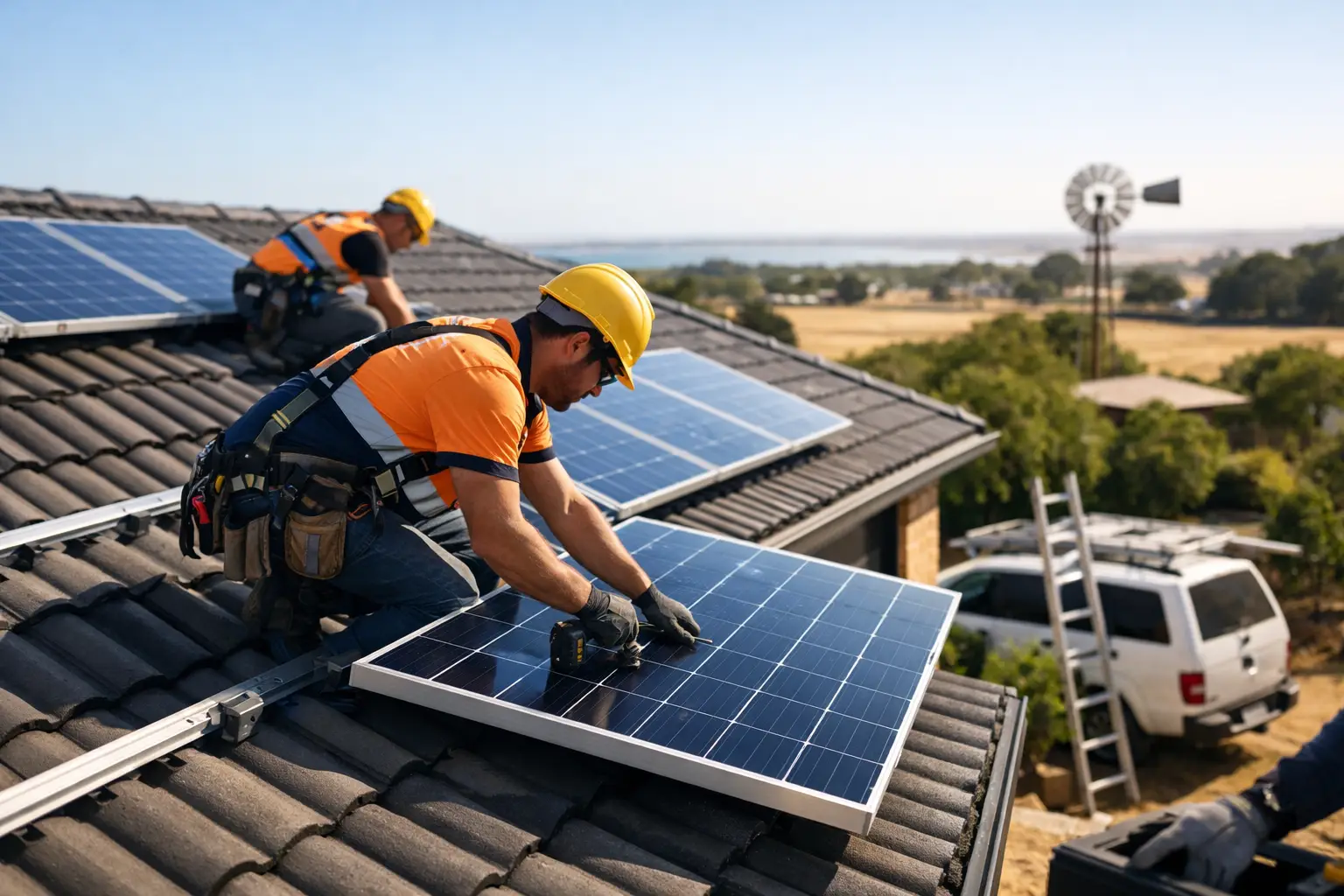
On installation day, the team will set up safe roof access, mount the panel rails, install the panels and run the required cabling. The inverter, isolators and monitoring equipment are fitted in the agreed location, with the system connected through the appropriate electrical protections.
Most standard residential installations can be completed efficiently, but there are variables. A multi-storey home, difficult roof access, switchboard upgrades, batteries or a complex cable route may require additional time. Good installers do not rush safety-critical work to meet an unrealistic timetable.
Your installers should be fully licensed and accredited for the work they perform. This is not a box-ticking exercise. Solar involves roof work, high-voltage electrical equipment and long-term exposure to South Australian heat and weather. Correct installation is central to system performance, safety and warranty protection.
6. Inspection, commissioning and meter changes
Fitting the equipment is not the final step. The system needs to be tested and commissioned so the inverter, panels, monitoring and electrical protections operate as intended. If a battery is included, its charging behaviour, app connection and operating settings also need to be checked.
For grid-connected systems, the electricity meter may need to be configured or replaced so it can measure imported and exported electricity correctly. Timing for this part can depend on the retailer and metering process. Your solar system may be physically installed before the meter work is finalised, so follow the installer’s directions on when the system can be switched on.
At handover, you should receive the key documents for your system, including compliance information, product warranties and instructions for monitoring your generation. Take the time to understand the monitoring app. It allows you to see how much energy your panels produce, how much the home uses and, where applicable, when the battery is charging or discharging.
7. Get the most from your solar after installation
Solar delivers the strongest value when the household uses more of its own generation. That may mean running the dishwasher, washing machine or pool pump during the day, pre-cooling the home before the evening peak, or timing EV charging around available solar production.
A battery changes the equation by storing some excess generation for later use. It can increase energy independence, but it is not automatically the right choice for every home. Battery value depends on your daytime solar surplus, evening consumption, electricity plan, desired backup capability and any eligible rebate support.
Review your monitoring data after the first few months. Seasonal conditions will change output, and summer use can look very different from winter use. If generation appears lower than expected, or if your household consumption has shifted, speak with your installer rather than guessing. A properly supported system is designed to be monitored, understood and maintained over its working life.
The best time to plan your solar is before energy bills force a rushed decision. A detailed assessment, quality equipment and accredited installation give your household a stronger foundation for lower energy costs and greater control. Enquire with a local South Australian solar team when you are ready to turn your roof space into a practical long-term asset.
No Comments