


27 Jun Commercial Solar Adelaide for Smarter Savings
Power bills have a way of creeping up just when a business is trying to protect margins. For Adelaide businesses with large daytime loads, rising network costs and pressure on cash flow, commercial solar Adelaide is no longer a nice idea to revisit later. It is a practical asset that can reduce ongoing operating costs and give business owners more control over one of their most unpredictable expenses.
The real opportunity is not simply putting panels on a roof. It is designing a system around how your site actually uses power, when demand peaks, and where future savings can come from. That is where an experienced South Australian installer makes a difference.
Why commercial solar in Adelaide makes sense
Adelaide conditions are well suited to solar generation, and many commercial sites use the most electricity during the day, when solar production is strongest. That overlap matters. It means a well-designed system can directly offset grid electricity while your business is operating, rather than exporting too much power for a lower return.
For warehouses, offices, workshops, retail centres, schools, medical facilities and agricultural operations, energy is often a fixed cost that feels hard to influence. Solar changes that. It gives businesses a way to actively reduce exposure to future electricity price rises while improving long-term budgeting.
There is also a broader business case. More organisations want to show practical action on sustainability, not just talk about it. A commercial solar system can support procurement goals, reporting requirements and customer expectations without distracting from day-to-day operations.
Still, not every business should install the same size system, battery setup or monitoring package. A site with strong daytime demand looks very different from a premises that closes early or has seasonal load changes. Good advice starts with the load profile, not a standard package.
What a well-planned commercial solar Adelaide system should deliver
A commercial installation should do more than look impressive on paper. It needs to perform reliably in real operating conditions and make sense for the way your site runs.
First, it should target self-consumption. The more of your solar generation you use on site, the stronger the financial return tends to be. That is why system sizing matters so much. Going too small can leave savings on the table. Going too large can reduce the value of each extra panel if your business cannot use that power during production hours.
Second, it should be built around quality workmanship. Commercial roofs, switchboards and site access can all add complexity. Licensed, accredited trades are essential, not optional. So is proper insurance cover. Businesses need confidence that installation, compliance and safety have been handled correctly from the start.
Third, it should allow for future changes. If your energy use is likely to grow, if fleet electrification is on the horizon, or if battery storage may become part of the next stage, that should be considered upfront. A system that works today but limits tomorrow is rarely the best decision.
Roof space, energy profile and site constraints
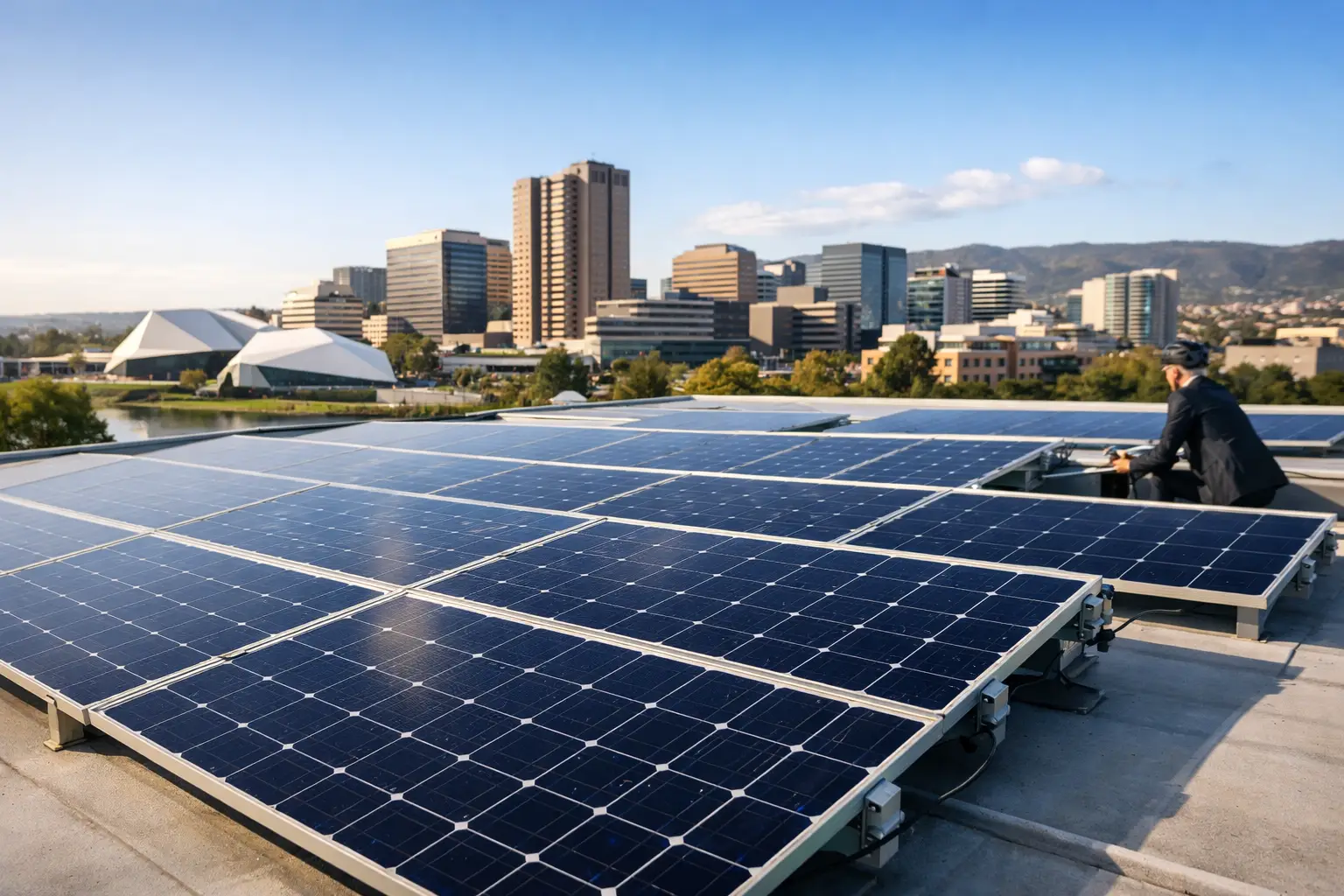
The best commercial solar outcomes start with a site-specific assessment. Roof size matters, but usable roof space matters more. Shade, orientation, pitch, roof condition and equipment placement all affect how much capacity can be installed and how well it will perform.
Energy usage patterns are just as important. Some businesses run strong loads from morning through late afternoon. Others see short demand spikes, overnight usage or weekend variation. These details shape system design and expected savings.
Then there are practical constraints. Access requirements, shutdown windows, tenancy arrangements and switchboard capacity can all influence the project. None of these are deal-breakers, but they do need to be assessed properly. The difference between a smooth installation and a disruptive one often comes down to planning.
Should your business add battery storage?
Battery storage is not right for every commercial site, but in the right setting it adds another layer of control. If your business has evening demand, wants backup capability for selected loads, or is looking to reduce reliance on peak grid supply, a battery may be worth serious consideration.
The key is to be realistic about the use case. Batteries can improve energy resilience and help shift stored solar energy into higher-value periods, but the benefit depends on your tariff structure, operating hours and goals. For some sites, solar alone delivers the strongest result. For others, a staged approach makes more sense, with solar first and battery storage added later.
This is where clear, honest guidance matters. A business should not be pushed into hardware it does not need. It should be shown where battery storage fits, where it does not, and how it may support future expansion, EV charging or broader energy management.
Installation quality matters more than sales promises
Commercial energy projects are not the place for shortcuts. The installer you choose needs more than a sales team and a brochure. They need a strong track record, local knowledge and the technical capability to deliver an end-to-end job properly.
That includes consultation, system design, rebate guidance where applicable, installation, commissioning and after-sales support. It also means understanding South Australian conditions, local compliance requirements and the practical realities of working on live commercial sites.
An established SA provider brings more than convenience. They bring accountability. If questions come up before, during or after the install, you want a team that is here, licensed, accredited and ready to stand behind the work. That reassurance matters to business owners, facility managers and property stakeholders who cannot afford preventable issues.
Commercial solar Adelaide and long-term business resilience
Solar is often framed as a cost-saving measure, and that is fair. But for many businesses, it is also about resilience. Energy volatility affects planning. When a site can generate a meaningful share of its own power, it gains a level of stability that the grid alone does not provide.
That does not mean complete independence in every case. Most commercial sites will still rely on the grid to some degree. But reducing reliance is valuable in itself. It can improve confidence in budgeting, support business continuity planning and create a stronger platform for future upgrades.
For businesses with regional operations, large properties or more complex usage patterns, the value can be even greater. Hybrid setups, battery integration and tailored system design may help solve challenges that a basic metro installation would not address.
Choosing the right commercial solar partner
When comparing providers, experience and credibility should carry real weight. A commercial project is not just a purchase. It is an infrastructure decision that affects operations for years.
Look for a team with a proven South Australian history, strong customer feedback, recognised accreditation and fully licensed trades. Ask whether they manage the process end to end. Ask whether they can tailor solutions for your site rather than forcing a one-size-fits-all answer. Ask whether they will still be there after the install is complete.
That is the standard serious businesses should expect. Confidence comes from process, proof and professionalism, not from the loudest promise.
For Adelaide businesses ready to take control of energy costs, commercial solar is a practical step with lasting value when it is done properly. If your site has the roof space, the daytime demand and the right installation partner, the gains can be significant. Contact us today to discuss a tailored solution for your business and get advice grounded in local experience, quality workmanship and results that hold up beyond the sales pitch.
The right system should feel less like a gamble and more like a smart business decision you will be glad you made early.
No Comments