



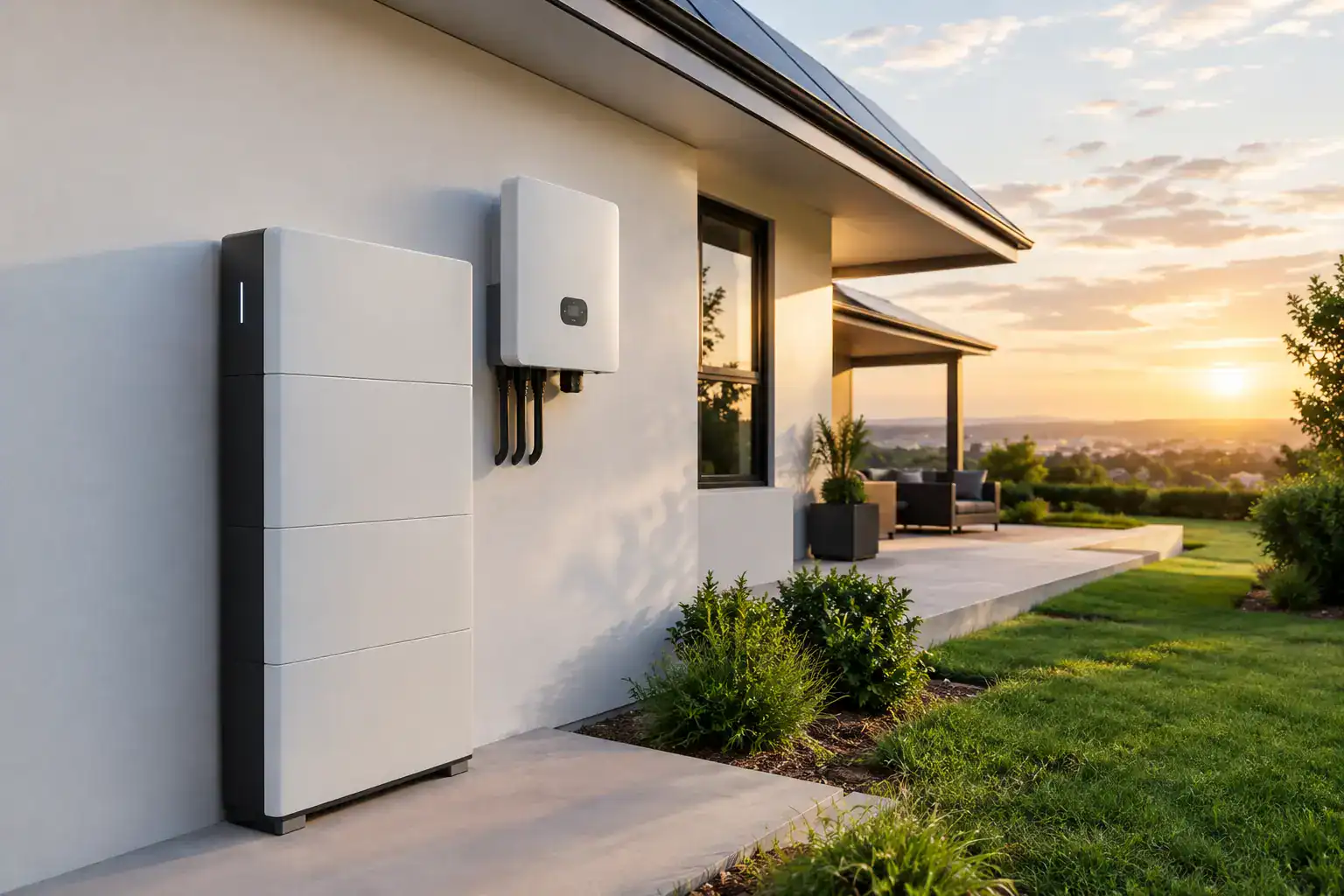
29 Oct Sigenergy Battery System Guide for SA Homes
When your solar panels are producing strongly at midday but your household uses most of its power after sunset, a battery can make a meaningful difference to your electricity bill. This Sigenergy battery system guide explains what the SigenStor system does, where it can fit, and the checks South Australian households and businesses should make before installation.
Sigenergy is designed around a modular, integrated approach to energy storage. Rather than treating a battery, inverter, backup supply and EV charging as separate upgrades, the system can bring key functions together in one coordinated setup. That can simplify the path to greater solar self-consumption, but the right configuration still depends on your property, electricity use and goals.
What is a Sigenergy battery system?
A Sigenergy battery system is centred on the SigenStor energy storage platform. Depending on the design, it can combine battery modules with a hybrid inverter, energy controller, backup capability and EV charging options. The system is modular, so capacity can be selected to suit a modest household load, a larger family home, a regional property or a commercial site with more demanding consumption.
The main job is straightforward. Your solar system generates electricity during daylight hours. Your home or business uses what it needs first, and excess production can charge the battery. Later, when solar generation drops, the battery can supply stored energy before you need to buy as much power from the grid.
That is particularly relevant in South Australia, where strong solar production can be paired with high evening electricity use. A well-sized battery gives more of your own generation a useful job after the sun goes down.
How SigenStor works with your solar and grid supply
The system monitors generation, battery level, household demand and grid conditions, then directs energy according to the settings and equipment installed. On a typical day, that means solar powers daytime appliances, charges the battery with excess energy and reduces grid imports during the evening.
The exact outcome depends on your consumption pattern. A household that runs air conditioning, cooking, pool equipment and laundry mainly after work may benefit from a different battery size and control strategy than a home where people are present throughout the day. For commercial operators, daytime loads may already absorb much of the solar output, making load profiles even more important than battery capacity alone.
A battery is not a licence to ignore energy efficiency. Reducing unnecessary consumption, shifting flexible loads to solar hours and selecting an appropriately sized solar system all contribute to stronger results. The battery should support a considered energy plan, not compensate for a system that has not been designed around how the property actually operates.
Modular capacity gives you room to plan
One of Sigenergy’s practical advantages is its modular battery design. Capacity can be built around current demand and, where suitable, expanded as your needs change. That may appeal if you are planning to add an EV, increase your household size, install more electric appliances or grow a business operation over time.
However, expansion potential should not be mistaken for a reason to undersize from the outset. If your aim is to cover substantial evening use or support essential loads during outages, the initial design needs to account for that. A proper assessment considers solar generation, interval data where available, seasonal energy use, future appliances and the limits of the site’s electrical infrastructure.
Backup power is valuable, but it needs clear expectations
Backup capability is often one of the strongest reasons to consider a battery. With the right backup configuration, a Sigenergy system may keep selected circuits operating during a grid outage. That can include essential lighting, refrigeration, internet, selected power points and other agreed loads.
The word “selected” matters. Backup performance depends on the installed equipment, battery capacity, inverter output, the circuits nominated for backup and the power drawn by appliances at that moment. High-demand equipment such as ducted air conditioning, electric hot water systems, ovens and large machinery can quickly change what is practical to run.
For regional properties and homes where continuity matters, an experienced installer will discuss whether essential-load backup or a broader backup arrangement is appropriate. It is better to define priorities before installation than to assume every circuit will run as normal during an outage.
Is a Sigenergy system right for your property?
A Sigenergy battery can be a strong option for households that already have solar, are installing a new solar PV system, or want to prepare for increased electrification. It can also suit businesses seeking to use more on-site solar energy and manage reliance on grid electricity outside production hours.
The best fit usually comes down to three questions: when do you use energy, how much solar surplus do you have, and what do you want the battery to achieve? Bill reduction, backup resilience, EV charging readiness and reduced grid dependence are all valid goals, but they do not always point to the same system design.
For example, a home with a large existing solar system and regular evening demand may place a high value on battery capacity. A household with limited solar surplus may need to review panel capacity first. A business operating mainly during daylight may benefit from a design focused on peak demand and operational loads rather than simply adding the largest battery possible.
Consider your switchboard and site conditions
Battery installation is an electrical project, not a plug-in appliance purchase. The proposed location needs suitable space, safe clearances, ventilation and practical access for installation and future servicing. Your switchboard, existing solar inverter, metering arrangement and single-phase or three-phase supply may also affect the final design.
For homes with an existing solar system, compatibility and integration should be assessed before any decision is made. In some cases, the most suitable arrangement will be an AC-coupled solution; in others, a hybrid design may make better sense. The answer depends on the equipment already installed and the outcome you want, not on a one-size-fits-all package.
Rebates and battery incentives in South Australia
Battery incentives can improve the value of an eligible installation, but schemes, funding levels and eligibility requirements can change. Homeowners should avoid making decisions based on old advertisements or assumptions from a neighbour’s installation.
A qualified local team can help you understand available South Australian battery support, how it may apply to your proposed system and what documentation is required. This is particularly useful when battery installation is part of a broader solar upgrade, where timing and system specifications can affect eligibility.
The key is to treat an incentive as a helpful contribution, not the only reason to install storage. A battery should still make sense for your energy use, property needs and longer-term plans.
Choosing the right system size and configuration
The most reliable starting point is a site-specific consultation. A good battery recommendation should be based on evidence: your electricity bills, solar generation, daily demand, whether you have controlled loads, likely future EV charging and the level of backup you expect.
Be wary of decisions made solely on battery capacity. A larger battery is not automatically better if it rarely charges fully, while a smaller unit may be disappointing if it is depleted before the evening peak is over. Inverter capacity matters too, because it affects how much power can be supplied at one time.
For businesses, review operating hours, refrigeration or machinery loads, seasonal changes and any plans to electrify vehicles or equipment. For households, think beyond current bills. A new EV, induction cooktop, pool heater or reverse-cycle air conditioning can materially alter your energy profile.
Why professional installation matters
The quality of installation is every bit as important as the battery brand. Your system must be designed, installed, commissioned and tested by properly qualified, accredited professionals who understand local requirements and the practical realities of South Australian homes and businesses.
At Allstate Solar, the focus is on matching proven solar and battery solutions to the property in front of us – with clear advice, licensed trades and a system design built around real energy outcomes. That includes explaining what the system can do, what it cannot do, and how to get the best value from it over time.
A Sigenergy battery system is worth considering when it supports a clear plan: use more of your own solar, protect the loads that matter most and prepare your property for a more electric future. Start with your energy habits, not a headline specification, then speak with an experienced local installer about a configuration that fits. Contact us today to discuss your battery and solar options.
No Comments