



07 Oct What the Vehicle to Grid Future Means for SA
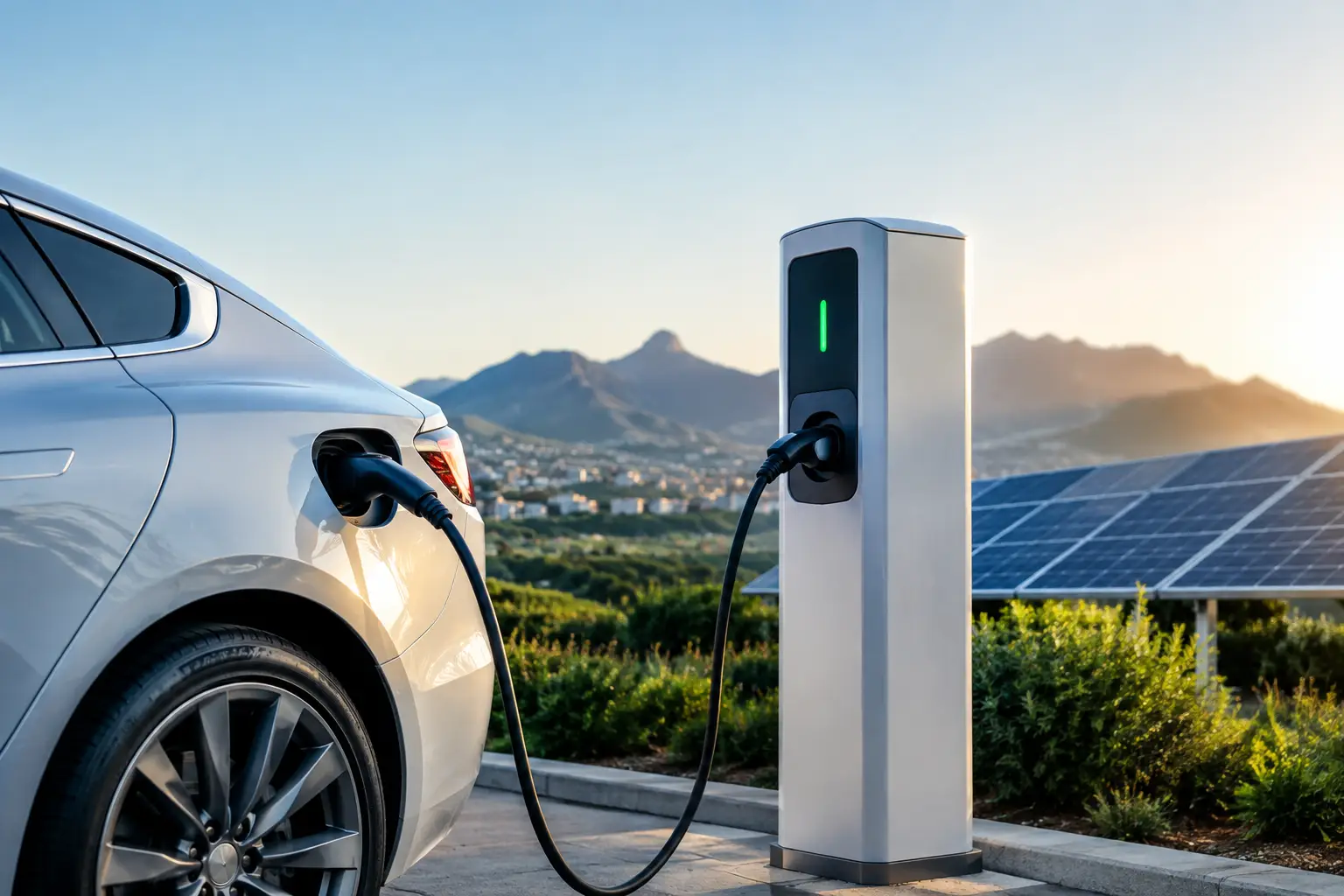
A parked electric vehicle spends far more time in the driveway than it does on South Australian roads. That simple fact is behind the growing interest in the vehicle to grid future: the possibility that an EV battery could do more than move your family or workforce from A to B. It could potentially support your home, work alongside solar panels and help manage electricity use when power is most valuable.
For solar households, this is an exciting prospect. EV batteries are large, and they are already paid for as part of the vehicle. But the technology is not yet a simple case of plugging in and sending power back through the meter. The right equipment, compatible vehicle, electricity arrangements and network approvals all matter.
Why the vehicle to grid future matters in South Australia
South Australia has long been a leader in rooftop solar. Many households generate strong solar output in the middle of the day, particularly during warmer months, then buy electricity from the grid after sunset when families arrive home, cook dinner and switch on heating or cooling.
A vehicle-to-grid system, often called V2G, is designed to make that pattern more flexible. Rather than only charging the EV from the home or grid, a compatible bidirectional charger may allow stored energy in the vehicle battery to flow back to the home or, where arrangements permit, back to the grid.
That could give households another way to use their own solar generation. Instead of exporting every surplus kilowatt-hour during the day, they may be able to charge an EV and retain some of that energy for later household use. For regional properties and businesses, the appeal may be even stronger where energy resilience and careful load management are priorities.
The broader opportunity is significant too. When many batteries can respond intelligently to local demand, they may help reduce pressure on the electricity system during peak periods. That is why V2G is often discussed alongside Virtual Power Plants and smarter energy networks.
V2G, vehicle to home and vehicle to load are different
These terms are often grouped together, but they describe different capabilities. Understanding the distinction will help you make better decisions when planning solar, battery storage or EV charging.
Vehicle to grid
V2G allows electricity to move from a compatible EV battery through a bidirectional charger and potentially into the electricity grid. This requires much more than a vehicle connection. It depends on approved hardware, software controls, retailer arrangements and local network requirements.
The potential benefit is that a vehicle could earn value or support the grid at selected times. The trade-off is that participation can involve more complexity, and availability is still developing across vehicle models, chargers and energy programs.
Vehicle to home
Vehicle-to-home, or V2H, focuses on powering household loads from the EV battery. In practice, this may help a home reduce grid imports in the evening or maintain selected circuits during an outage, depending on the system design and safety equipment installed.
This is often the capability homeowners are really looking for. They want their solar energy to go further and want confidence that their home can keep essential loads running when conditions are difficult. A properly designed home battery may remain the more established option for this purpose today, while V2H capability continues to mature.
Vehicle to load
Vehicle-to-load, or V2L, is generally the simplest function. It lets an EV supply power directly to appliances through an outlet or adaptor. It can be useful for camping, tools or limited temporary power, but it is not the same as safely integrating a vehicle with your household switchboard.
It is a useful feature, but it should not be mistaken for a whole-home backup solution.
What needs to happen before V2G becomes routine
The future is moving forward, but the timeline will vary. A practical V2G setup needs several pieces to work together reliably.
First, the EV itself must support bidirectional charging. Not every electric vehicle does, and capability can differ by model, year and market. A vehicle may have a large battery but still be unable to export power in the way a V2G system requires.
Second, the charger needs to be bidirectional and approved for the intended application. This is not the same as a standard home EV charger. It needs to manage electricity flow safely in both directions and communicate correctly with the home, vehicle and, where applicable, the grid.
Third, the installation needs to meet applicable Australian standards and local distribution network rules. Solar, batteries, backup circuits and EV charging are not separate boxes when they are installed at one property. They form an energy system, and the design must account for switchboard capacity, export limits, metering, protection settings and the loads you want supported.
Finally, the energy plan or program needs to make sense. A household that drives long distances every day may need most of its EV battery available for transport. A family with a second vehicle that is parked at home during peak periods may find the model more suitable. Businesses will need to balance fleet availability with energy savings and operational needs.
Will using an EV battery wear it out faster?
Battery wear is a fair question. Every battery has a finite service life, and charging and discharging contribute to it. However, the real impact depends on battery chemistry, temperature, charging speeds, depth of discharge, software controls and how frequently the vehicle is used for energy support.
The key point is that V2G should not be treated as a set-and-forget promise of free household power. Owners need clear information about vehicle warranty terms, operating limits and the control settings available. Most people will want to reserve a minimum driving range, so the vehicle is ready when needed.
For example, a household might choose to keep a substantial portion of the battery reserved for school runs, work travel or unexpected trips, while allowing a smaller portion to support the home in the evening. The best approach depends on how you use your car, your solar production and whether you already have a stationary battery.
Is a home battery still worthwhile?
For many South Australian homes, yes. A dedicated home battery is designed to sit at the property, store solar energy and support the home without affecting vehicle availability. It can operate every day, even when the car is away, and it can be sized around household consumption rather than transport needs.
A vehicle battery may eventually become an important second energy asset, but it does not automatically replace a stationary battery. Consider the practical moments: your EV may be at work when solar generation is high, away for a weekend, or needed fully charged for a long trip. A fixed battery remains available at home through all of that.
The strongest future setup for some properties may combine solar panels, a quality home battery, smart EV charging and later, compatible bidirectional charging. This can give the household more control over when it stores, uses or exports energy. It also avoids relying on a single asset for every energy and transport need.
Planning your home for the vehicle to grid future
You do not need to wait for every V2G product and program to mature before making a sensible solar investment. The smart move is to install an energy system that is designed with future options in mind.
When considering solar, battery storage or an EV charger, ask whether your switchboard has capacity for future upgrades, how export limits affect your system, whether backup power is important, and which parts of the home you would want to keep running during an outage. If you expect to buy an EV, consider where it will park and charge most often. Cable runs, charger location and daily driving habits all affect the final design.
For commercial sites, fleet schedules are equally important. A business may have excellent solar generation but little benefit from V2G if vehicles leave before daytime charging can occur. Conversely, a site with vehicles parked for long periods may be well placed to use smart charging to absorb solar output and reduce peak-time purchases.
Allstate Solar can assess solar, battery and EV charging requirements as one connected energy plan, rather than treating each upgrade as a separate job. That helps ensure your investment works for your property now while leaving room for technology that may become more accessible over the years ahead.
The vehicle to grid future is promising, but the best energy decision is still the one that matches your home, driving routine and electricity goals today. Build the right foundation, use proven equipment, and keep your options open for when bidirectional charging is ready to deliver practical value at your address.
No Comments