



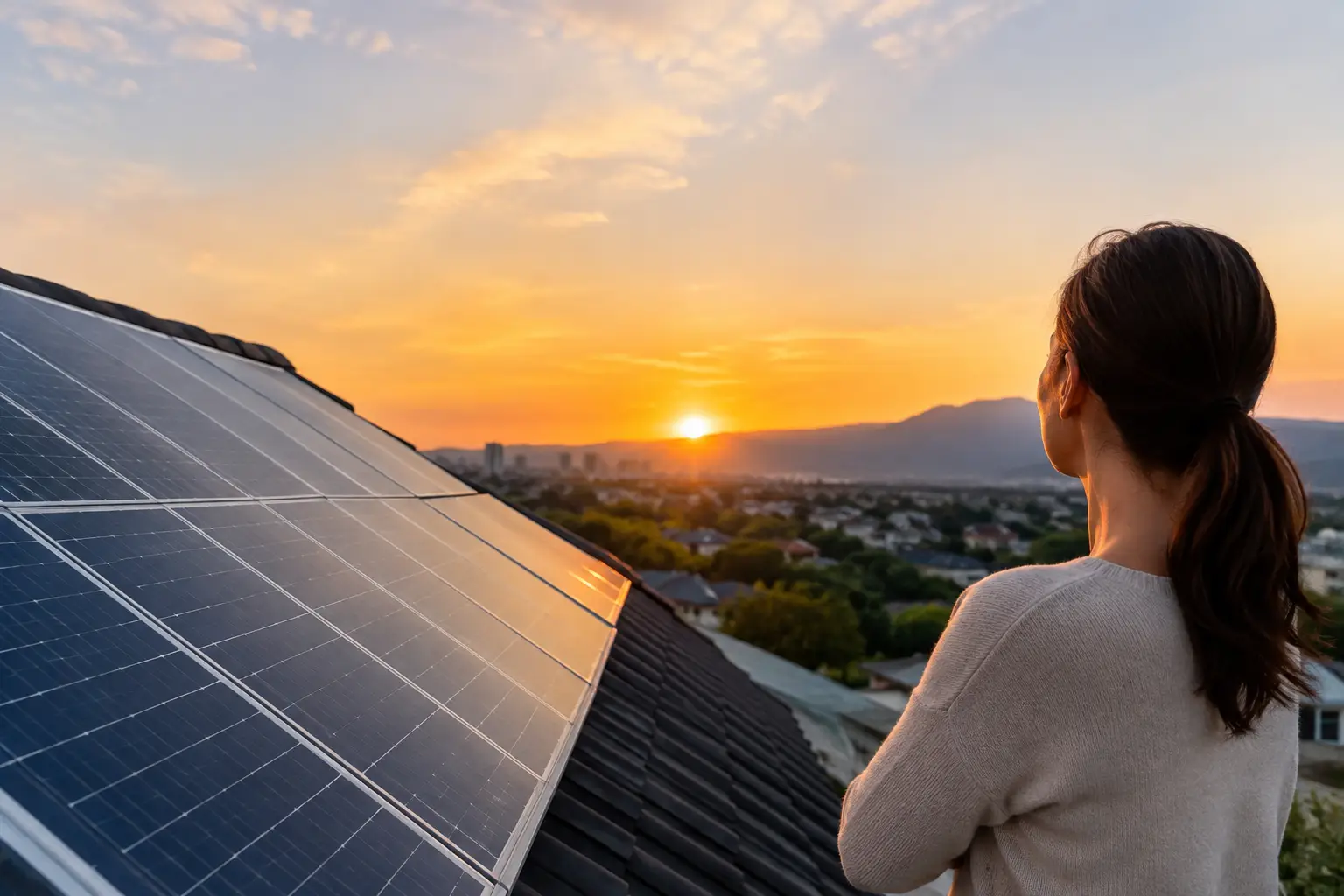
03 Oct What Happens During Solar Outages in SA?
A bright South Australian day does not automatically mean your home will have power during a blackout. Many homeowners are surprised to learn what happens during solar outages: a standard grid-connected solar system usually switches off, even while the panels are producing plenty of electricity.
That is not a fault with the panels. It is a built-in safety requirement. The difference between having solar and having dependable backup power comes down to how your system has been designed, particularly whether it includes a compatible battery and blackout protection.
Why standard solar panels switch off in a blackout
Most homes in Adelaide and across regional South Australia have grid-connected solar PV systems. During normal operation, your inverter converts solar power into usable electricity for the home. Any surplus can be sent to the grid, while the grid supplies extra power whenever your solar production is not enough.
When the grid goes down, the inverter is required to stop exporting and shut down. This is known as anti-islanding protection. It prevents your solar system from sending electricity into power lines that crews may be working on during an outage.
Put simply, your panels may still be sitting in full sunshine, but your home will not be able to use their output unless your system has the right backup capability. The shutdown protects utility workers, your property and the wider electricity network.
A common misunderstanding is that solar panels themselves have stopped working. In most cases, they have not. The inverter has simply disconnected because it can no longer see a stable grid supply.
What happens during solar outages with no battery?
If you have a conventional grid-connected solar system without a battery, your home will generally lose power in the same way as a home without solar. Lights, standard power points, refrigeration, internet equipment and hard-wired appliances will turn off until grid electricity is restored.
Once the outage ends, the inverter performs safety checks before reconnecting. It will then restart automatically and resume supplying solar energy to the home. This can take a few minutes rather than happening instantly.
The practical trade-off is straightforward. Solar panels are excellent for reducing daytime electricity purchases and cutting bills, but they are not automatically a blackout solution. If energy resilience is a priority, the system needs to be designed for it from the start or upgraded with suitable battery storage and backup hardware.
How a battery changes the outcome
A home battery stores solar energy for use later in the day, overnight or when electricity prices are higher. More importantly for many households, certain battery systems can keep selected parts of the home operating when the grid fails.
During an outage, a properly configured battery system isolates your property from the grid and creates a safe local power supply. Your solar panels can then recharge the battery during daylight, while the battery supplies the backed-up circuits. This is often called backup power, blackout protection or islanding capability.
The exact experience depends on the battery model, its capacity, the inverter, the backup gateway or changeover equipment, and the circuits included in the backup design. A quality installation considers all of these components together. Adding a battery alone does not guarantee that every circuit in the house will remain live during a blackout.
Which appliances can stay on?
Many households choose to back up essential loads such as lights, the fridge, selected power points, internet equipment, security systems and garage access. For regional properties, the priorities may also include communications, a pressure pump or other critical equipment, provided the system is sized appropriately.
High-demand appliances require careful planning. Ducted air conditioning, electric hot water, ovens, large pool pumps and some workshop machinery can use substantial power. It may be possible to include some of these loads in a battery-backed design, but doing so affects the required battery capacity and inverter output.
The goal is not to promise unlimited power. It is to build a practical backup plan around the loads that matter most to your household or business when the grid is unavailable.
How long will backup power last?
There is no single answer, because runtime depends on how much stored energy you have and what you are using at the time. A battery supporting a fridge, lights, Wi-Fi and a few essential power points may last far longer than one also running heating, cooling and multiple heavy appliances.
Daytime solar production can extend that runtime significantly. On a clear day, your panels may recharge the battery while helping to run essential loads. At night, during poor weather or through an extended outage, the battery will need to carry more of the demand on its own.
This is why a good consultation starts with your energy usage, essential circuits, roof solar capacity and outage priorities. A smaller battery may be ideal for bill savings and short interruptions. A larger setup may be better suited to a family home, regional property or commercial site where continuity is more important.
Solar outages versus a fault in your system
Not every loss of solar production is caused by a grid outage. If your home still has grid power but your inverter is showing a warning light, error message or no generation, the issue may be with the solar system itself.
Check whether your neighbours have power and whether your switchboard safety switches have tripped. Your inverter display or monitoring app may also show a fault code. Do not attempt to open electrical equipment or reset components repeatedly. Solar and battery systems contain live electrical equipment and should only be assessed by appropriately qualified professionals.
If the neighbourhood has lost power, a switched-off solar inverter is usually expected behaviour. If the grid is operating normally and the inverter remains offline, arrange for an accredited solar electrician to investigate the cause.
Planning a solar and battery system for SA blackouts
South Australians know that outages can be caused by storms, heat events, network maintenance and local faults. For some households, a brief interruption is mainly inconvenient. For others, especially people working from home, families with medical or communication needs, and regional property owners, it can have a much bigger impact.
A battery-backed solar system should be designed around real-life priorities rather than a generic package. Before choosing a solution, consider when your home uses the most energy, which appliances are genuinely essential, how long you want to maintain basic power and whether future additions such as an EV charger may change your load profile.
It is also worth asking how the system behaves during a blackout. Will it back up only essential circuits or provide broader home coverage? Can solar continue charging the battery while the grid is down? What happens if the battery reaches its reserve level overnight? These are practical questions that should have clear answers before installation.
For customers participating in a Virtual Power Plant program, backup settings also deserve attention. VPP participation can deliver value, but the system should retain an appropriate reserve for your household’s needs where the selected program and equipment allow it.
The value of professional system design
Backup power is not simply a matter of putting more panels on the roof. It involves battery selection, switchboard integration, protection settings, load assessment and compliant installation. The workmanship behind the system matters just as much as the products chosen.
Allstate Solar designs solar and battery solutions for South Australian homes, regional properties and businesses that want lower energy costs without losing sight of reliability. From premium battery options including Tesla Powerwall and BYD systems to properly planned backup circuits, the focus should always be on a solution that fits the property and performs as intended.
If blackouts are a concern, do not assume your existing panels will keep the lights on. Ask for a clear assessment of your current system and the battery backup options that suit your essential energy needs. A well-designed system can turn a grid outage from a major disruption into a manageable inconvenience.
No Comments