



21 Sep Rural Property Solar Design That Works Harder
A rural property does not use electricity like a suburban home. There may be a bore pump starting before sunrise, a cool room running through summer, sheds with three-phase machinery, and a house that needs dependable power when the weather turns. A well-planned rural property solar design starts with those real demands, not a one-size-fits-all panel count.
For regional South Australian property owners, the right system can reduce reliance on expensive grid electricity, make better use of daylight hours and provide greater confidence during outages. But good results come from careful site assessment, accurate load information and equipment that is matched to how the property operates.
Start With How the Property Uses Power
The most useful question is not, “How many panels will fit on the roof?” It is, “What needs power, when does it run, and what cannot be left without it?” The answer shapes every part of the system.
A home with standard appliances, lighting and air conditioning has a different load profile from a farm property with irrigation, pumps, workshops, electric gates, refrigeration or staff accommodation. Some equipment draws a large amount of power for a short period. Other loads run quietly all day and can add up quickly over a billing cycle.
Looking at electricity bills is a sensible first step, but bills alone do not show the full picture. Seasonal changes matter. A bore may work hardest in dry periods. Harvest, shearing, packing or summer cooling can alter demand significantly. Future plans matter too, including an EV charger, another dwelling, additional refrigeration or a new shed.
A quality assessment should identify daytime consumption, evening use, peak-demand equipment and critical loads. This creates a system that works for the property you have now, while allowing for sensible expansion later.
Rural Property Solar Design Needs the Right Site Plan
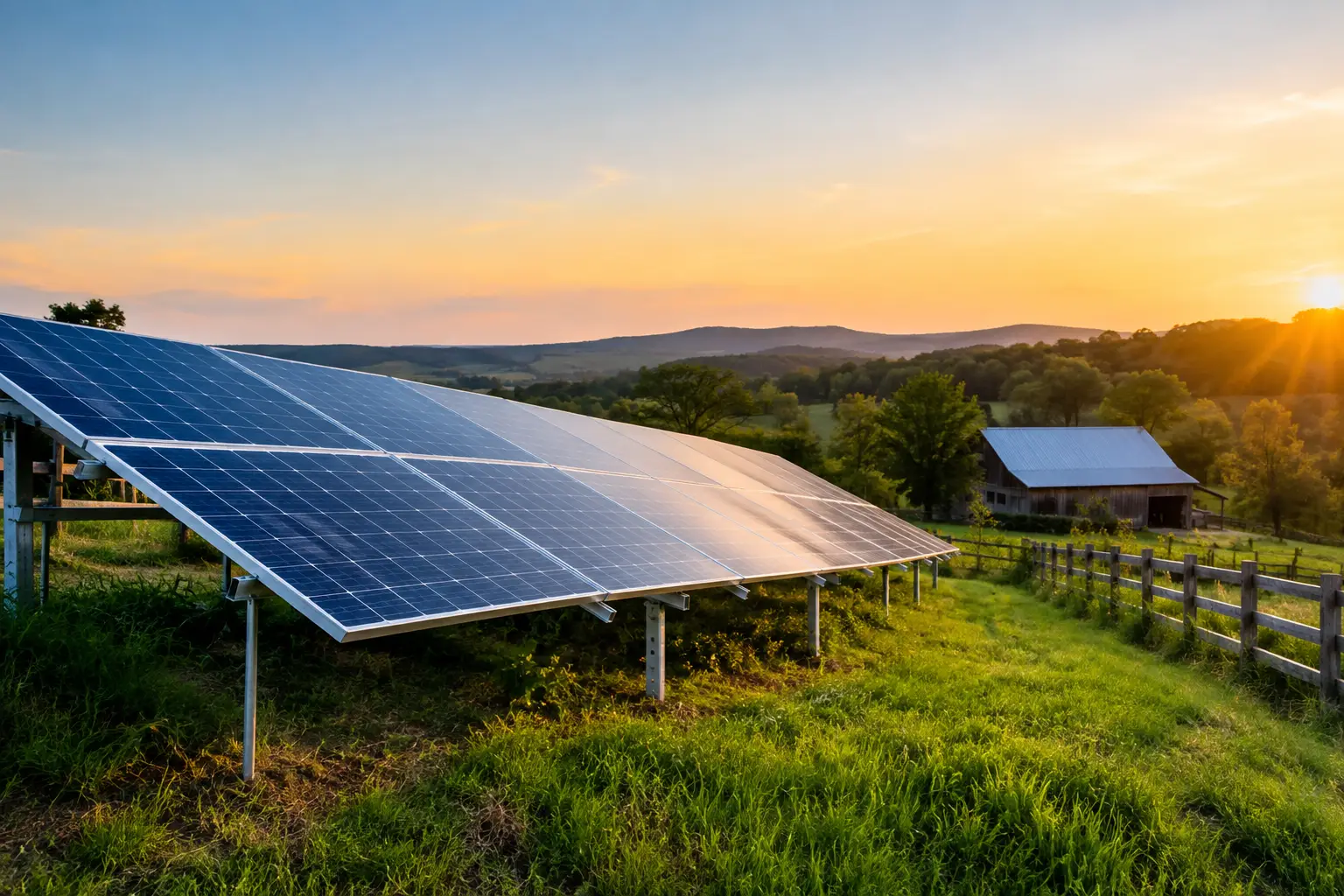
Rural sites often offer more installation options than a typical home. Panels may suit a house roof, shed roof, machinery shed or a purpose-designed ground-mounted structure. Each option has benefits, and the best choice depends on the site.
A large shed roof can provide generous, clear space and may sit close to major daytime loads. A house roof may be practical where the switchboard and battery location are nearby. Ground mounting can work well where roof orientation, shading or structural condition creates limitations. It does, however, require suitable space, secure mounting and a thoughtful approach to trenching and cable runs.
Orientation and tilt influence production, but they are not the only considerations. Shade from mature gums, ridgelines, silos, water tanks and neighbouring structures can affect output at different times of year. So can dust, bird activity and access for cleaning or maintenance. A system should be designed around actual site conditions rather than assumed from an aerial image alone.
Distance Can Affect the Design
On a broad property, the point where energy is generated may be a long way from the point where it is used. That distance needs to be planned properly. Long cable runs can increase installation complexity and create electrical losses if not designed to the required standard.
Sometimes the best answer is a central system serving the main switchboard. In other cases, it makes more sense to assess separate loads or buildings as part of the overall energy plan. The right approach depends on the existing electrical infrastructure, load location and plans for the property.
Size Solar Around Daytime Value
Solar panels produce their strongest output during daylight hours. For that reason, the most valuable rural solar systems are often designed to serve loads that can operate during the day.
Pumping, cooling, pool filtration, workshop activity and some forms of irrigation may be scheduled to make better use of solar generation, where operationally practical. This reduces the amount of electricity imported from the grid and can improve the return from the system without compromising the work that needs to get done.
That does not mean every load needs to be shifted to the middle of the day. Families still cook dinner, use heating and cooling, and charge devices after sunset. The aim is to understand which loads are flexible and which are essential, then build the system around those realities.
Oversizing without a plan can leave a property exporting more energy than it uses at times when feed-in value is limited. Undersizing can mean missed savings and continued dependence on grid power during busy daylight periods. A tailored design finds the balance between solar production, self-consumption and expected future demand.
Battery Storage Is About Control and Confidence
For many regional households and property owners, battery storage is not only about saving solar energy for the evening. It is about having more control over when energy is used and greater resilience when supply is interrupted.
A battery can store surplus solar generation during the day and supply the home or selected loads later. It can also support energy use during higher-cost periods, depending on the electricity plan and system settings. Premium options such as Tesla Powerwall and BYD battery systems provide flexible storage choices for properties with different energy needs.
The important distinction is between a battery that stores energy and a system designed to provide backup power. Not every battery installation will keep every circuit running during an outage. Backup capability must be designed from the beginning, with clear decisions about what needs to stay on.
Choose Critical Loads Carefully
On a rural property, critical loads may include refrigeration, communications equipment, lighting, selected power points, security systems, a gate, medical equipment or a water pump. The right backup arrangement depends on the battery capacity, solar generation, the starting demand of equipment and how long an outage may last.
Trying to back up every high-demand circuit can increase complexity and may not deliver the most practical outcome. A considered essential-loads plan usually provides better value and clearer expectations. It also gives the property owner confidence about what will continue operating when grid power is unavailable.
For properties where grid supply is unavailable or unsuitable, off-grid and hybrid solar setups require even more detailed planning. Generator integration, battery capacity, seasonal solar production and load management all need to be considered. These systems are highly capable when designed correctly, but they should never be treated as a standard install.
Make Sure the Electrical Infrastructure Is Ready
Solar performance is only part of the job. Existing switchboards, metering arrangements, three-phase supply, earthing and protection equipment all influence what can be installed safely and effectively.
Older rural properties can have electrical infrastructure that has grown over time, with additions made for sheds, pumps, accommodation or machinery. A proper inspection identifies what is already in place and whether upgrades are needed before a new solar or battery system is connected.
This is where experience matters. The system needs to meet applicable standards, operate safely with the existing supply and be installed by fully licensed, accredited trades. It should also be commissioned carefully, with the owner shown how monitoring works and what to expect from the system across different seasons.
Allow for Rebates, Approvals and the Next Stage
Government-backed solar and battery incentives can improve the value of an energy upgrade, but eligibility and available support can change. Getting the paperwork, product selection and installation pathway right from the start helps avoid costly misunderstandings.
Grid connection requirements may also affect export limits, inverter configuration and the approval process. For a regional site, these details should be addressed before installation is booked, not discovered after equipment has arrived.
It is also wise to design with the next five to 10 years in mind. If an EV, new water infrastructure, workshop expansion or additional accommodation is likely, raise it during the consultation. Allowing for future capacity can be more practical than rebuilding the whole energy plan later.
Get a Design Built for Your Property
A rural solar system should reflect the way your property works on its busiest day, not just its average electricity bill. The right design brings together solar generation, battery storage, backup priorities and the electrical realities of the site into one reliable plan.
Allstate Solar provides end-to-end solar, battery, EV charger, off-grid and hybrid solutions for South Australian homes and regional properties. Our experienced team can assess your energy use, site conditions and available rebate options, then recommend a system built for lasting value. Contact us today to discuss a rural property solar design that is ready for the work ahead.
No Comments