



24 Aug Can Solar Charge Electric Cars at Home in SA?
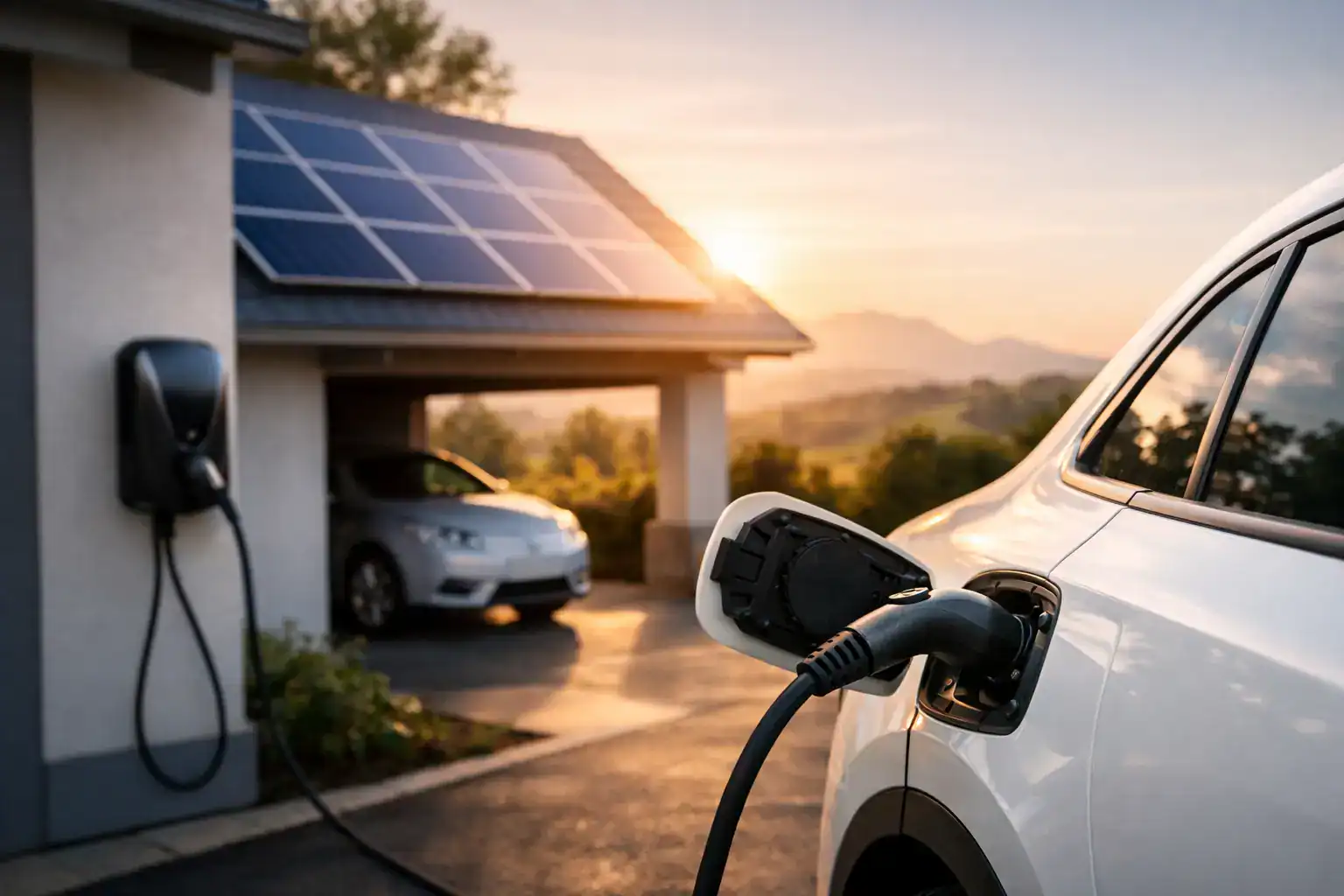
An electric car parked in the driveway can become one of the biggest loads in a home, or one of the smartest ways to use the solar energy already coming from the roof. So, can solar charge electric cars? Yes. With the right solar system, a properly installed EV charger and a charging plan that suits your household, South Australian homeowners can use solar power to put meaningful kilometres into their vehicle.
The practical answer is not that every charge will be completely free or entirely solar-powered. Your result depends on when you are home, when your car is plugged in, how much solar your roof produces and whether you have battery storage. But for households with daytime generation, solar EV charging can reduce reliance on grid electricity and make better use of the energy their system produces.
Can solar charge electric cars directly?
Solar panels produce DC electricity, while your home and EV charger use managed electrical systems that deliver power safely to the vehicle. In a grid-connected home, your inverter converts solar energy for use in the house. When the sun is shining, that energy can run appliances, charge a home battery and supply an EV charger.
The vehicle does not need a separate set of panels or a special solar-only charger. It needs a compatible charger installed correctly at your property. The charging system draws electricity from your home’s supply, prioritising available solar generation where the charger and energy management settings allow it.
If your panels are producing more power than your home is using, the surplus can be directed to the car instead of being exported to the grid. That is often the most valuable charging window. A smart EV charger can adjust charging output in response to your solar production, helping you use more of your own generation without overloading your household supply.
For many SA families, the simplest routine is to plug in after arriving home and schedule charging for the middle of the day where possible. If you work from home, have a second vehicle at home during daylight hours, or can charge on weekends, solar charging is particularly well suited.
How much solar is needed to charge an EV?
There is no single system size that suits every electric vehicle owner. The right answer comes down to how far you drive, your vehicle’s energy consumption, your daytime power use and the size and orientation of your existing solar system.
As a guide, an EV may use roughly 15 to 22 kWh per 100 kilometres, depending on the model, driving conditions, load and use of air conditioning. A daily commute of 40 kilometres may therefore require around 6 to 9 kWh of energy. On a clear day, a well-designed solar system may produce far more than this across its total generation period, but that energy is also needed for the rest of the household.
This is why system design matters more than a simple panel count. A home with a modest daytime load may have substantial excess solar available for charging. A larger family home with ducted cooling, a pool pump and several people at home may use most of its generation before the car is plugged in.
A site-specific assessment considers your roof space, shading, switchboard capacity, consumption profile and likely EV charging habits. It also allows the system to be designed for your future needs, rather than only the power bills you had before owning an electric car.
A daytime charging example
Imagine a household whose solar system is generating 5 kW around midday. The home is using 1.5 kW for normal loads, leaving about 3.5 kW available. A smart charger may charge the EV at a rate that follows that surplus, keeping grid imports low while still adding energy to the vehicle.
Over several sunny hours, that can add enough charge for everyday driving. It may not fill a large battery from empty in one afternoon, and it does not have to. Most owners top up their vehicle regularly rather than waiting for a full recharge.
Why a dedicated EV charger makes a difference
A standard power point may be suitable for occasional or low-speed charging where permitted, but it is not the best long-term solution for most EV households. A dedicated EV charger is designed for regular charging, provides faster and more controlled energy delivery, and can be matched to the electrical capacity of your home.
For solar households, smart charging features are especially useful. Depending on the charger and system configuration, these may allow you to schedule charging during solar hours, manage the load alongside other major appliances and adjust charging to suit surplus solar production.
The electrical work is just as important as the charger itself. Your switchboard, cabling, solar inverter and household loads need to be assessed by qualified professionals. This protects the safety of your property and ensures the installation is configured to perform as intended.
Allstate Solar provides end-to-end solar, battery and EV charger solutions for South Australian homes and businesses, helping customers plan an energy setup that works together rather than adding separate systems piece by piece.
Can a home battery charge your electric car at night?
Yes, a home battery can charge an electric car after sunset, provided it has stored enough solar energy during the day and is configured to supply the required load. This can increase your use of solar-generated electricity, particularly for households that return home after work.
There is a trade-off. An EV battery is much larger than most household batteries. If you charge the car heavily overnight, you may use energy that would otherwise keep the home running through the evening and early morning. For some households, it makes better financial sense to reserve the home battery for essential evening consumption and charge the vehicle from solar during the day whenever possible.
The best approach depends on your priorities. If backup capability, evening self-sufficiency and lower grid use are important, battery settings can be tailored around those goals. If the car is home during sunny hours, direct solar charging may reduce the need to cycle the home battery for vehicle charging.
Battery storage can still be a strong addition for EV owners, especially where solar generation regularly exceeds daytime household use. It gives you more control over when you use stored energy and may support a broader energy independence plan. The key is selecting the right battery capacity and charging strategy, not assuming a battery will cover every load every night.
What happens when there is not enough sunshine?
Solar charging does not stop the moment a cloud passes over Adelaide or regional SA. Your charger can draw from a combination of available solar, battery storage and the grid, depending on how it is set up. The vehicle will continue charging, but the source of that energy may change.
On poor-weather days, during winter or when charging overnight, grid electricity may be required. That is normal. A smart charging plan helps you decide whether to continue charging at a set rate, slow down to follow surplus solar, or wait for a scheduled period.
This flexibility matters because an EV is not just another appliance. You need it ready when you need it. If you have an early trip planned, reliable charging may be more valuable than waiting for perfect solar conditions. A well-designed system gives you that certainty while helping you capture solar savings whenever the opportunity is there.
Making solar EV charging work for your household
The strongest results come from looking at the complete picture: your driving pattern, roof generation, electricity use, battery goals and charging location. A family that drives mostly on weekends will have different needs from a regional property owner travelling long distances each week. A business fleet has another set of considerations again, including daytime vehicle availability and site demand.
Before installing an EV charger or expanding a solar system, consider when the car is normally parked at home. Check how much excess solar you produce during the day and whether your current switchboard is ready for an additional high-demand circuit. Think about future changes too, such as a second EV, a home battery, growing family energy use or a move towards electrified heating and hot water.
A tailored design is the difference between simply having solar and actively using it to power your transport. With accredited installation and the right equipment, your roof can support lower-cost kilometres, better use of your solar generation and a more resilient home energy setup.
If you are planning an EV, or already have one sitting in the driveway, a professional assessment can show what your solar system can realistically deliver and where an EV charger or battery fits. Contact a qualified local team to build a solution around the way you live, drive and use energy.
No Comments