



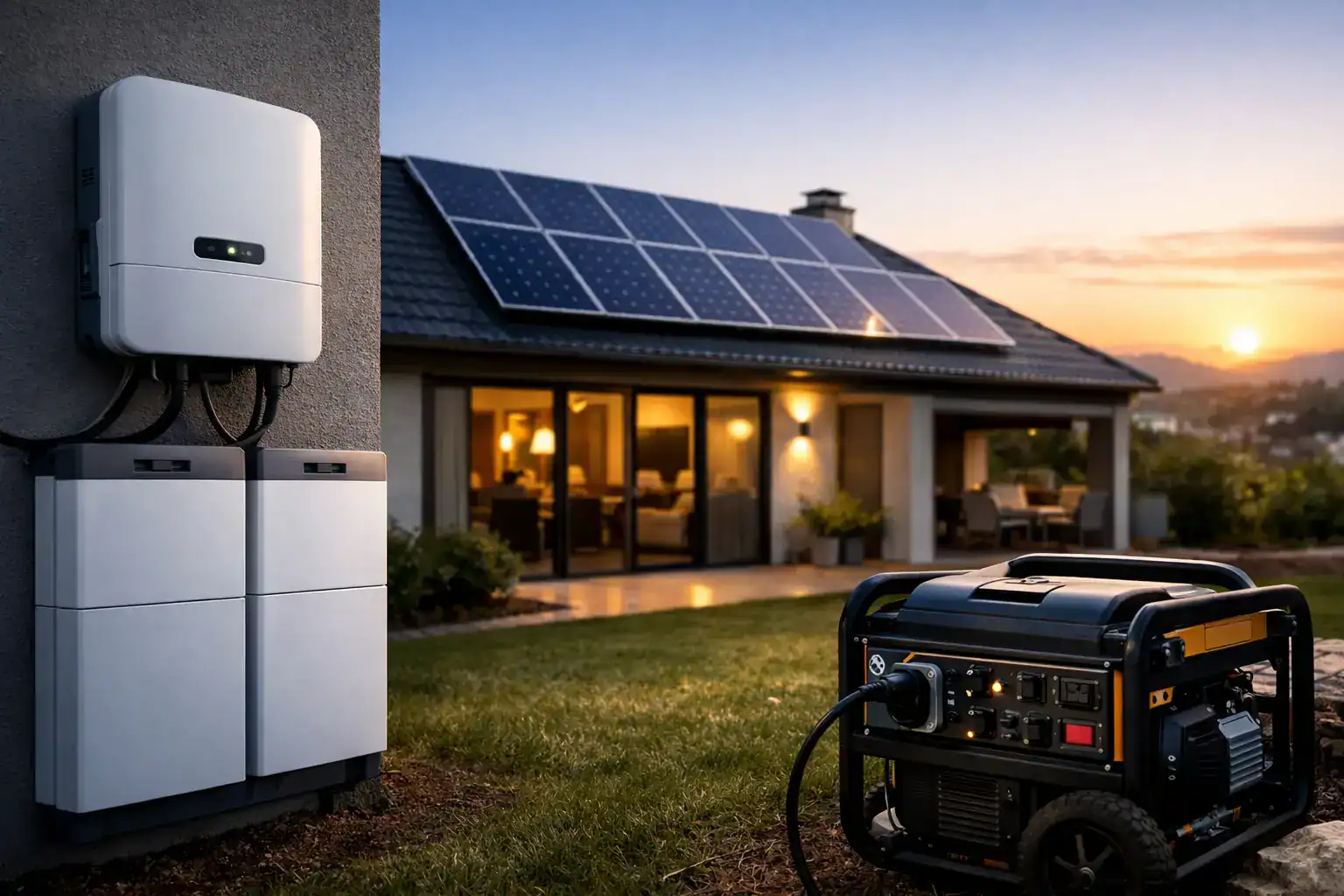
22 Aug Blackout Protection Solar Systems for SA Homes
A power outage can turn a hot Adelaide afternoon or a stormy regional night into a real disruption within minutes. Lights go out, the fridge stops, the internet drops and electric gates may not operate. Blackout protection solar systems are designed to keep selected parts of your property powered when the grid is unavailable, using stored solar energy and properly configured backup equipment.
For South Australian households, the difference is not simply having solar panels on the roof. It is having a solar and battery system designed from the outset to operate safely during an outage. That requires the right battery, the right backup hardware and an installation team that understands how your home uses power.
What blackout protection actually means
Most standard solar PV systems switch off when the grid fails. This is a safety requirement. It protects network workers from electricity being sent back into power lines while repairs are underway. So, even if the sun is shining and your panels are producing energy, a conventional grid-connected solar system will usually not power your home during a blackout.
A blackout-capable system adds battery storage and backup functionality. When an outage occurs, the system disconnects from the grid and supplies nominated household circuits from the battery. If there is enough sunlight, your solar panels can continue charging the battery and supporting those loads during daylight hours.
The practical outcome depends on the system design. Some homes back up only essential circuits, while others are designed for broader home coverage. Neither approach is automatically better. The right choice depends on your budget, property layout, appliance loads and what you need to keep operating.
How blackout protection solar systems work
A properly designed backup system has three core elements: solar generation, a compatible home battery and a backup gateway or changeover arrangement. Together, they monitor the grid and respond when supply is interrupted.
When grid power is available, your solar panels can run daytime appliances, charge the battery and reduce the electricity you buy from the grid. When the grid goes down, the backup equipment isolates your property from the network. The battery then supplies the selected circuits, with solar production contributing when conditions allow.
This changeover is generally automatic. You should not need to go outside, start a generator or manually connect appliances. Some sensitive equipment, such as computers and certain medical devices, may still benefit from their own uninterrupted power supply for added protection during the brief transfer period.
Battery capacity matters, but so does battery output. Capacity is measured in kilowatt-hours and indicates how much energy can be stored. Output, measured in kilowatts, indicates how much power the battery can deliver at one time. A battery may hold plenty of energy but still be unsuitable for running several high-demand appliances together if its output is too limited.
Decide what needs to stay on
For many South Australian homes, an essential-loads approach offers the best balance of resilience and value. Rather than attempting to run every circuit, the system supports the equipment that matters most during an outage.
This commonly includes refrigeration, selected lighting, internet equipment, mobile charging points, a television, garage door operation, security systems and a few general power outlets. Rural and regional properties may also prioritise water pumps, communications equipment, electric fencing controls or refrigeration for stored produce.
High-demand appliances need more careful planning. Ducted air conditioning, electric ovens, cooktops, pool pumps, spa heaters and large workshop equipment can drain a battery quickly or require more output than a standard backup configuration provides. That does not mean they cannot be included, but it should be an informed design decision rather than an assumption.
A quality consultation should identify your non-negotiables first. If keeping the fridge, lights and internet running for an evening is the goal, the solution will look different from a system designed to support a regional property through a longer network interruption.
Single-phase and three-phase homes
Three-phase properties require particular attention. Depending on the battery and backup configuration, not every phase or every appliance may be supported during an outage. Larger homes, workshops and commercial sites often have three-phase supply, so the backup strategy must be matched to the electrical setup before installation.
This is one reason a site assessment matters. A licensed, accredited installer can review your switchboard, existing solar system, cable routes, loads and network connection to determine what can be backed up safely and effectively.
Battery size is only part of the answer
It is tempting to choose a battery based on the largest advertised storage figure. In practice, the useful question is: how long do you need your priority loads to operate, and how much solar energy can you expect to generate while the outage continues?
A modest essential-loads setup may provide meaningful coverage for a household that uses power carefully. A larger battery system can support more appliances and offer greater confidence through overnight outages, cloudy weather or extended disruptions. Adding solar generation improves the picture again, because daytime production can recharge the battery rather than relying on stored energy alone.
Your household habits matter. A family that runs air conditioning, electric cooking and multiple appliances at the same time will need a different design from a couple focused on refrigeration, lights and communications. Battery systems from recognised brands, including Tesla Powerwall and BYD options, can be configured for different household needs, subject to the site and backup requirements.
Do not assume every battery provides backup
Battery storage and blackout protection are related, but they are not identical. Some systems are installed primarily to store solar energy and lower evening grid use. Others include the additional hardware and electrical design needed to provide backup power when the grid fails.
Before accepting a quote, ask direct questions. Which circuits will remain live during an outage? Is backup automatic? What appliances are excluded? Can the solar panels charge the battery while the grid is down? How does the system perform if the battery is partly discharged when the outage starts?
You should also ask how any Virtual Power Plant participation may affect your battery settings and available reserve. These programs can offer value for suitable households, but backup needs should be clearly discussed before enrolment. A system should be configured around the level of emergency energy you want to retain.
A proper installation protects more than comfort
Backup power involves switchboards, safety isolation, battery placement, network rules and compliance obligations. It is not a job for shortcuts or vague promises. The quality of the design and installation determines whether the system behaves as expected when you need it most.
At Allstate Solar, systems are assessed around the property, the household’s priorities and the practical realities of South Australian conditions. Fully licensed, accredited trades are essential when integrating solar, batteries and backup protection into an existing home or business electrical system.
For commercial operators, the planning process should go further. Identify the cost of downtime, critical equipment, refrigeration requirements, communications and safe shutdown procedures. A solar and battery solution may support business continuity, but it must be sized around actual operating loads rather than a generic package.
Make blackout planning part of your solar decision
The best time to plan for backup is when you are considering solar or battery storage, not after the next outage. Retrofitting may be possible for some existing systems, although compatibility, switchboard upgrades and available space can affect the options.
Government-backed solar and battery incentives can also influence the timing of a project. Eligibility and program conditions can change, so it pays to seek current advice before making a decision. An experienced local provider can help you understand the available pathway and design a system that meets both your energy-saving and resilience goals.
A blackout-ready solar system will not make energy unlimited. You may still need to manage major appliances during a long outage. What it can provide is confidence: essential power, solar recharging during the day and a clear plan for the moments when grid electricity is not there.
If reliable backup power is a priority for your home, regional property or business, arrange a tailored assessment before choosing a battery. The right system is the one built around what you genuinely need to keep running.
No Comments