



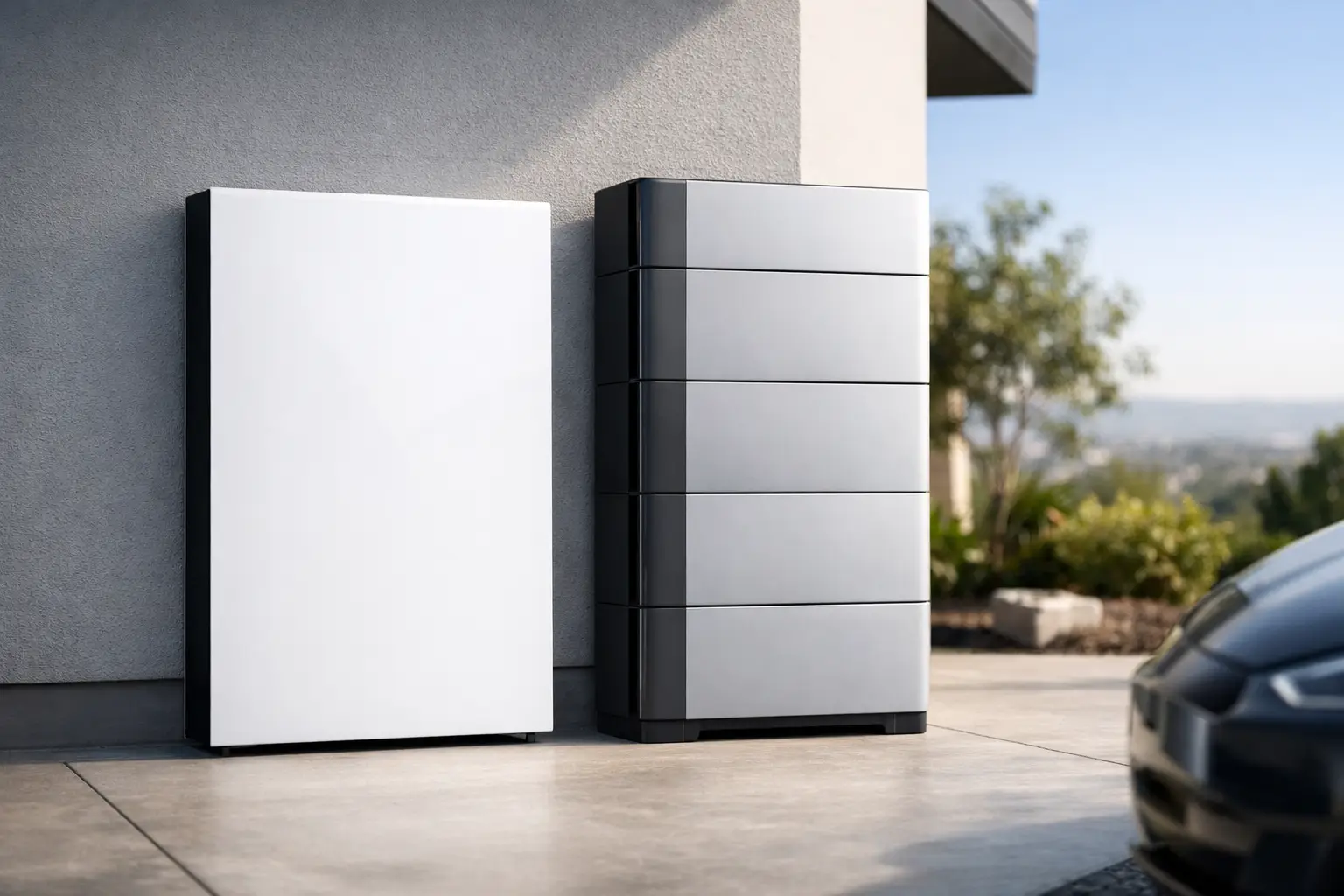
05 Jul Tesla Powerwall vs BYD: Which Suits You?
If you are weighing up Tesla Powerwall vs BYD, the right answer usually comes down to how you use power after sunset, what level of backup you want, and whether you need a battery that can grow with your property. For South Australian homes and regional sites, those details matter more than brand recognition alone.
Battery storage is no longer just a nice extra on top of solar. For many households and businesses, it is the part of the system that determines how much grid power you still need in the evening, how protected you are during an outage, and how much value you can get from your solar investment over time. That is why this comparison needs to be practical, not just technical.
Tesla Powerwall vs BYD: the main difference
At a high level, Tesla Powerwall is often chosen by customers who want a sleek all-in-one home battery with strong app control and straightforward backup capability. BYD is often preferred by customers who want flexibility, modular sizing, and a battery system that can be tailored more closely to different energy loads.
Neither option is automatically better in every situation. A suburban family home with consistent evening usage may lean one way. A larger property with varying loads, shed circuits or staged expansion plans may lean another. The best battery is the one that matches the way your site actually consumes and stores energy.
How Tesla Powerwall suits Australian households
Tesla Powerwall has built its reputation around simplicity. It is a well-known home battery with a polished design, integrated technology and an app experience that many customers find easy to understand from day one. For homeowners who want battery storage without getting buried in technical decisions, that appeal is real.
Powerwall is often a strong fit for households looking for reliable backup support and simple monitoring. The system is designed to work as a complete battery solution rather than a highly segmented modular build. That can make the decision process easier for homes with fairly standard consumption patterns.
For many South Australian households, another attraction is the user experience. If you want to see how much solar you generated, how much battery capacity remains and when your home is drawing from the grid, the Tesla interface is a major selling point. It gives customers confidence that they can actually follow what the system is doing.
That said, simplicity can come with less flexibility in how capacity is configured. If your property has unusual usage patterns or you want to build battery storage in stages, a more modular approach may be better suited.
Where BYD stands out
BYD battery systems are well regarded for their modular design and versatility. That makes them particularly attractive for customers who want to size a system more precisely around their property, whether that is a family home, a regional site or a commercial premises.
One of BYD’s key strengths is scalability. Instead of being locked into a single battery format, customers can often build a system to suit current demand and then expand later if energy needs grow. That matters for households planning to add an EV charger, for businesses increasing operating hours, or for rural properties where loads can shift seasonally.
BYD also suits customers who want a battery solution integrated into a broader custom-designed energy system. If your site has more complexity than a standard suburban roof and meter box setup, flexibility matters. In those cases, modular battery architecture can be a practical advantage rather than just a feature on a brochure.
Backup power and blackout protection
For many buyers, the most emotional part of the Tesla Powerwall vs BYD decision is backup power. People want to know what stays on when the grid goes down.
The real answer depends on system design, not just the battery badge. Backup performance is influenced by the battery itself, the inverter setup, the backup circuit design and the loads you are expecting the system to carry. A battery can only perform well in an outage if the installation has been planned properly.
Tesla Powerwall is widely known for home backup applications and is often selected by customers who want a clear backup solution built into the package. BYD can also be configured for backup, but the final outcome depends more heavily on how the overall system is specified.
This is where experienced design and installation matter. If you want blackout protection for essential circuits like lighting, refrigeration, internet, gates or selected business equipment, that needs to be mapped out clearly before installation. Guesswork at this stage usually leads to disappointment later.
Capacity, scalability and future plans
This is one of the biggest practical differences between the two options. Tesla Powerwall generally appeals to customers who want a known battery size and a cleaner decision path. BYD often appeals to customers who want to scale storage capacity with more precision.
If your energy use is predictable and you simply want to store daytime solar for evening use, Tesla may be a natural fit. If your usage is likely to change, or you want a system that can be expanded with more flexibility, BYD can be very attractive.
That question becomes even more important if you are planning other upgrades. An EV charger, ducted air conditioning, pool equipment, workshop use, irrigation loads or future tenancy changes can all shift how much storage actually makes sense. Buying for today alone is not always the smartest move.
Monitoring, control and day-to-day experience
A battery system is not just a box on the wall. It is something you live with for years, and the day-to-day user experience matters more than many buyers expect.
Tesla has a strong reputation for user-friendly monitoring. Many customers like the clean app layout and the way system behaviour is presented in a simple visual format. That can make a real difference for households who want transparency without technical complexity.
BYD can also deliver strong performance, but the experience depends more on the wider system configuration and compatible components. For some customers, that is perfectly fine. They care more about outcomes than app polish. For others, especially owner-occupiers who want easy visibility over their energy habits, the interface can influence satisfaction.
Tesla Powerwall vs BYD for SA homes, regional sites and business
For metro Adelaide households, Tesla Powerwall often suits customers wanting a premium, recognisable battery with simple monitoring and dependable home backup potential. It is a strong choice where ease of use and clean system integration are high priorities.
For regional properties, BYD can be especially appealing where energy needs are less standard. If you have variable loads, future expansion plans or a more tailored solar and battery design in mind, BYD’s modular approach may offer better long-term fit.
For commercial operators, the decision usually comes down to system scale, load profile and whether staged expansion is likely. A battery recommendation should follow site analysis, not branding preference. Businesses that get this part right are usually the ones that see stronger long-term value from storage.
The decision most people should make first
Before choosing between Tesla and BYD, work out what success looks like for your property. Is the goal lower evening bills, outage protection, greater self-sufficiency, support for an EV, or a battery setup that can grow over time? Once that is clear, the brand choice becomes much easier.
This is also where local experience counts. South Australian households and businesses are dealing with specific network conditions, usage patterns and rebate opportunities. A battery recommendation should reflect those local factors, not a generic national sales script.
A properly designed system can help you get more from your solar, improve resilience and make your energy costs more predictable. If you are comparing Tesla Powerwall vs BYD and want advice based on your actual usage, not guesswork, contact us today and speak with a fully qualified local team. If you are eligible, you can also apply for the battery rebate scheme and put that support towards a system that fits your property properly the first time.
No Comments