



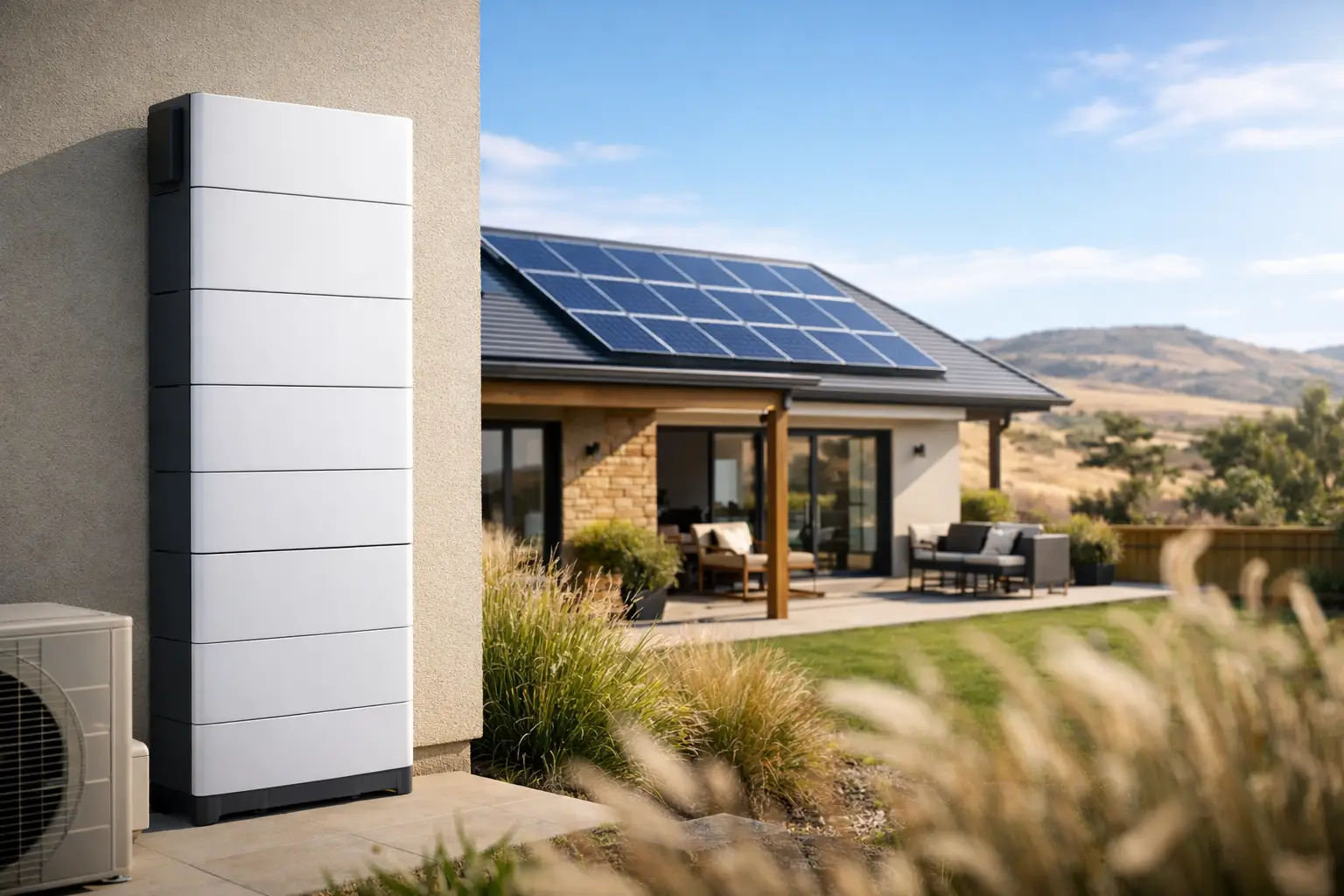
01 Jul BYD Battery Review for South Australian Homes
When a battery system is going to sit on your wall for years and carry a big part of your household energy strategy, brand reputation matters. This BYD battery review looks at what South Australian homeowners and property owners actually need to know – not marketing spin, but where BYD performs well, where it needs the right setup, and who it suits best.
BYD has built a strong name in battery storage for good reason. It is widely recognised for lithium iron phosphate chemistry, modular design and solid compatibility with quality inverter systems. For households focused on lowering grid reliance, storing excess solar and getting more control over evening power use, BYD is a serious option.
BYD battery review: what stands out first
The first thing most people notice about BYD is flexibility. Rather than forcing every home into one fixed battery size, BYD systems are typically designed in stackable modules. That matters because not every property uses energy the same way. A smaller metro home with modest overnight loads has very different battery needs from a regional property running pumps, shedding and heavier evening consumption.
That modular approach gives BYD an edge for customers who want a system sized properly from the outset or expanded later. If your electricity usage changes after adding an EV charger, air conditioning, or a growing household, a scalable battery is often a smarter long-term fit than a one-size solution.
The second standout is battery chemistry. BYD commonly uses lithium iron phosphate, often shortened to LFP. For most buyers, the chemistry matters less than the practical outcome. LFP is well regarded for thermal stability, long cycle life and dependable day-to-day use. In plain terms, it is a battery type with a strong reputation for safety and durability when installed correctly by accredited professionals.
How BYD performs in real home use
A battery can look impressive on a spec sheet and still disappoint in everyday operation if it is not matched properly to the site. In real-world use, BYD tends to perform best in homes with good solar generation and predictable evening demand. That is where battery storage has the greatest impact – storing excess daytime production and reducing the amount of expensive power pulled from the grid after sunset.
For many South Australian households, that means a BYD battery can make a noticeable difference to self-consumption. Instead of exporting a large share of solar during the day and buying it back later at higher retail rates, you hold more of that energy on site. Over time, that can improve the value of your solar system and smooth out rising electricity costs.
Performance also depends on inverter pairing and system design. BYD batteries are often chosen as part of a broader energy solution, not as a standalone product decision. If the inverter, solar array and battery size are balanced properly, the result is a more responsive system that supports household loads without wasting capacity. If the battery is oversized or undersized, you will not get the same value.
That is why site assessment matters. Roof generation, seasonal demand, tariff structure and household behaviour all shape how well a battery performs.
BYD battery review for backup and energy independence
One of the most common questions is whether BYD is a good option for backup power. The answer is that it can be, but backup capability depends on the overall system design, not just the battery brand itself. Some households want basic backup for lighting, refrigeration and internet. Others want a more resilient setup that can carry key circuits through a longer outage.
BYD is well suited to customers who care about energy independence, especially in areas where grid reliability is a concern or where outages are more than just an inconvenience. Regional properties often have more to gain here than city homes. If you rely on pumps, communications, refrigeration or business equipment, backup planning should be part of the battery discussion from day one.
The important point is this: buying a quality battery does not automatically mean your whole home stays running during an outage. Backup loads need to be planned and configured properly. A good installer will explain what the battery can realistically support and help prioritise the circuits that matter most.
Where BYD battery systems offer strong value
BYD tends to offer strong value for households that want a dependable, premium battery without paying for features they may never use. Its reputation comes less from flashy branding and more from practical strengths – modular sizing, proven chemistry and broad use across residential and commercial applications.
That value becomes clearer when the battery is part of a long-term energy strategy. If your goal is simply to add a battery because it sounds like the next step after solar, the return may be less obvious. If your goal is to reduce evening grid usage, improve resilience, prepare for future electrification and make better use of your existing solar, BYD starts to make much more sense.
Commercial operators can also benefit, particularly where load shifting and solar self-consumption matter. The right battery setup can help manage daytime generation, reduce peak grid reliance and support more stable operational costs. As always, suitability comes down to usage profile rather than hype.
Trade-offs to consider before choosing BYD
No battery is the right answer for every site, and a fair BYD battery review needs to acknowledge that. While BYD is a strong option, there are trade-offs.
The modular design is excellent for scalability, but it also means system design needs to be handled carefully. More capacity is not automatically better. Some homes simply do not use enough overnight energy to justify a larger battery, particularly if daytime occupancy is low and evening loads are light.
A second consideration is compatibility. BYD works very well within the right system architecture, but battery performance is tied closely to the inverter and installation quality. This is not a plug-and-play appliance you pick off a shelf. It needs proper design, correct commissioning and experienced electricians who understand battery storage rules and network requirements.
There is also the matter of expectations. A battery is not magic. It will not wipe out every electricity bill, and it will not suit every tariff or usage pattern equally well. Homes with limited solar production, heavy overnight heating loads or poor system design may not see the outcome they expect. The product can be excellent and still be the wrong fit for a particular property.
Is BYD a good fit for South Australian households?
For many South Australian homes, yes. BYD is especially well suited to customers who already have solar or are installing a new solar system and want to increase self-sufficiency. It also makes sense for families looking ahead to EV charging, all-electric appliances or future energy price pressure.
South Australia has strong solar conditions, and that gives batteries more opportunity to do useful work. A battery can capture surplus daytime generation and hold it for the hours when your home actually needs it. That is where BYD tends to shine – in practical daily cycling rather than occasional novelty use.
Regional customers may see additional appeal if grid reliability and property resilience are priorities. Commercial sites with suitable load profiles can also benefit from BYD’s scalable approach. The common thread is this: the battery needs to be tailored to the site, not sold as a generic add-on.
What to check before you move ahead
Before installing any battery, look beyond the brochure. Ask how the proposed BYD system will integrate with your solar array, what usable capacity makes sense for your loads, and whether backup is included or optional. Clarify how the system is expected to perform across summer and winter, not just on ideal sunny days.
It is also worth asking about installer accreditation, electrical licensing and experience with battery storage in South Australia. Battery systems are not the place to cut corners. The quality of installation affects safety, performance and long-term reliability.
For households considering available incentive programs, rebate eligibility can also shape timing and system design. If support is available, that can improve the case for installing a battery now rather than waiting.
A BYD battery is not the right choice because it is popular. It is the right choice when it matches your energy use, your solar system and your plans for the property. If you want a battery that is proven, scalable and well suited to serious solar households, BYD deserves a close look. And if you want it designed properly the first time, speak with an experienced local team that understands South Australian conditions and can build a system around the way you actually use power.
No Comments