



15 Jun Off Grid Solar Adelaide for Reliable Power
When the power drops out on a hot Adelaide Hills afternoon, or your regional property is too far from the grid to make connection worthwhile, energy stops being a convenience and becomes a daily operational issue. That is where off grid solar Adelaide solutions need to do more than look good on paper – they need to deliver dependable power, every day, in South Australian conditions.
For households, farms and commercial sites, going off grid is not simply about leaving the network behind. It is about building an energy system that matches how you live, work and use power across summer heat, winter demand, cloudy days and changing seasonal loads. Done properly, an off-grid setup can provide long-term independence and real peace of mind. Done poorly, it can leave you rationing power, running a generator too often, or paying to fix design mistakes that should never have happened.
Is off grid solar Adelaide right for your property?
Not every property needs a fully off-grid system. In some cases, a hybrid setup makes more sense, especially if grid supply is available but unreliable, or if you want battery backup and lower bills without fully disconnecting. That is why the first question should never be, “How many panels do I need?” It should be, “What kind of energy outcome do I actually need?”
For remote homes and regional blocks, off-grid is often the practical choice when the cost of a grid connection is excessive or the site is simply too isolated. For primary producers, workshops and commercial facilities, it can be a strategic move to improve resilience and reduce exposure to supply issues. For lifestyle properties, it is often about self-sufficiency as much as economics.
The right answer depends on your daily usage, peak demand, overnight consumption, backup expectations and future plans. If you are adding air conditioning, pumping, refrigeration, EV charging or machinery later, your system should be designed with that in mind from the start.
What makes an off-grid system work well
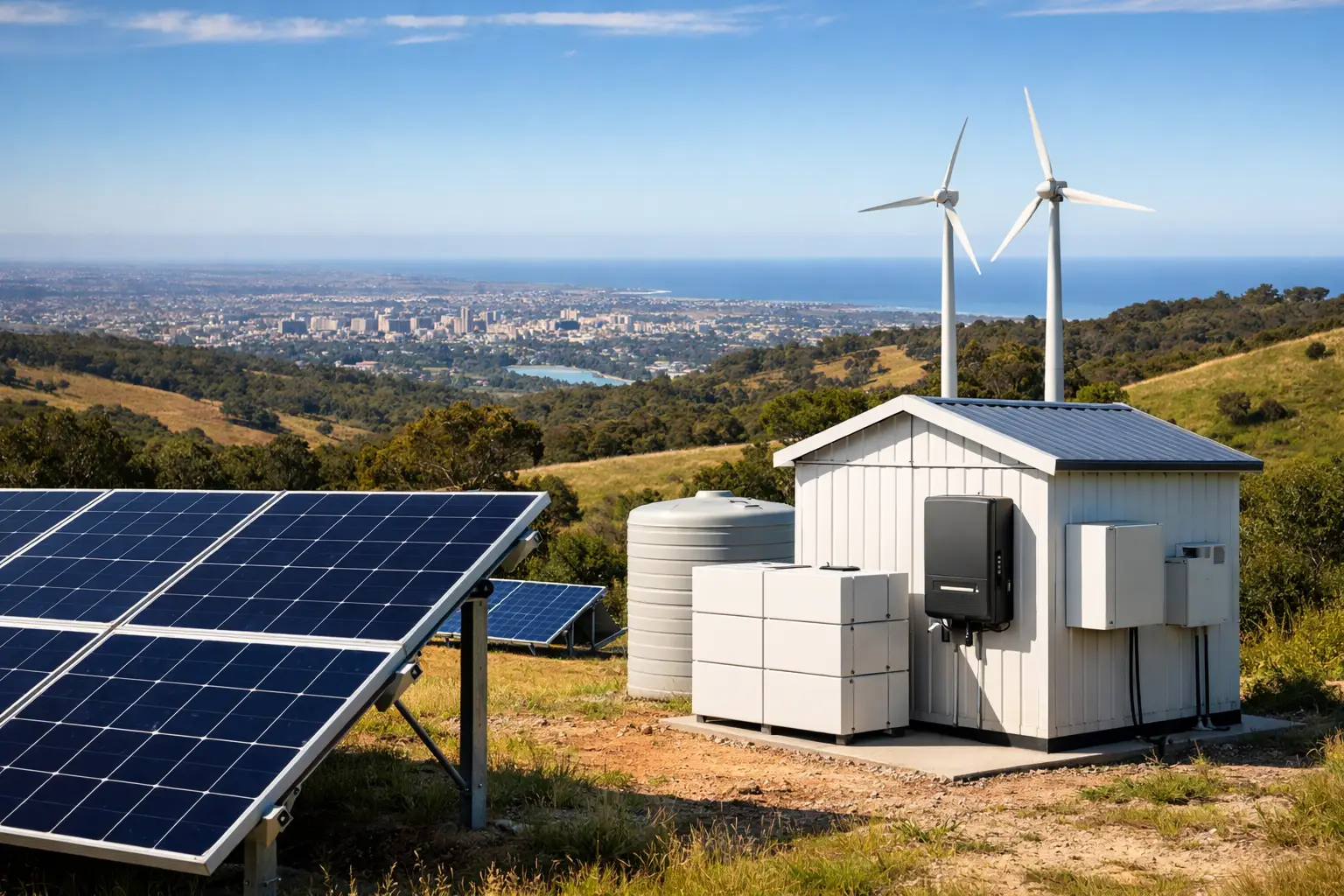
A reliable off-grid solar system is never just panels on a roof. It is a complete energy ecosystem made up of solar generation, battery storage, inverter technology, backup integration and intelligent system design. The quality of each part matters, but the design matters just as much.
Solar panels need to generate enough energy across the year, not just in ideal weather. Battery storage has to carry your property through evenings, poor weather and periods of higher demand. Inverters must manage loads correctly and support stable supply to the appliances and equipment you rely on. If backup generation is included, it needs to work as part of the overall system rather than as an afterthought.
That is why proper load analysis is essential. A family home with efficient appliances behaves very differently to a rural property with pumps, sheds, cool rooms or workshop equipment. A business with daytime operations has different needs again. The system has to be sized around real use, not guesswork.
Why South Australian conditions matter
South Australia offers strong solar potential, but local conditions still shape performance. Adelaide and regional SA sites can experience long hot summers, dust, varying roof orientations and periods of poor weather that affect production. Properties in bushfire-prone or remote areas may also place a higher value on resilience, backup planning and site-specific electrical design.
That is one reason local experience matters. A provider working in SA understands the difference between a neat brochure solution and a system that performs in real conditions. Roof type, property layout, shading, switchboard condition and future expansion all need to be assessed properly. There is no benefit in overselling a simple site or undersizing a complex one.
A sound design also takes your day-to-day habits seriously. If most of your load comes after sunset, battery capacity becomes even more critical. If irrigation or machinery runs during the day, panel output and inverter configuration need to reflect that. These are practical details, but they are the details that determine whether an off-grid system feels effortless or frustrating.
Off grid solar Adelaide for homes, farms and businesses
The phrase off grid solar Adelaide covers a wide range of property types, and that matters because no two sites use energy in exactly the same way.
For homes, the focus is often on comfort, reliability and avoiding compromise. People want to run lighting, refrigeration, kitchen appliances, internet, heating and cooling without constantly thinking about battery levels. Families also want room to grow, whether that means a pool pump, a home office or an electric vehicle in the future.
For farms and regional properties, reliability is usually non-negotiable. Water pumps, fencing systems, workshops, accommodation and cold storage can all place serious demands on a system. Seasonal changes also affect usage, so a design that looks adequate in one month can struggle badly in another if it has not been planned properly.
For commercial operators, downtime costs money. An off-grid or advanced hybrid solution can support continuity, improve control over energy supply and help protect operations from network limitations. The best commercial systems are designed around business-critical loads, not broad assumptions.
Battery storage is central, not optional
In an off-grid environment, battery storage is what turns daytime generation into round-the-clock usable power. Without it, solar alone cannot support a property through the evening, overnight or low-generation periods. That is why battery selection is one of the most important decisions in the entire project.
Capacity matters, but so does battery chemistry, cycling performance, inverter compatibility and long-term support. Premium solutions from established brands can provide stronger reliability and better integration, particularly when paired with quality system design and installation. The aim is not simply to store excess solar. It is to create a stable, manageable power supply you can trust.
There is also a difference between a battery that works and a battery system that works well. The latter is matched to your actual load profile, communicates properly with your inverter setup and is installed by accredited professionals who understand compliance, protection and performance.
Installation quality is where confidence comes from
A well-designed off-grid system only delivers if it is installed correctly. That means licensed, accredited trades, correct product integration, compliant electrical work and a team that understands the full process from consultation through to commissioning.
This is not the type of project where shortcuts pay off. Off-grid systems involve higher design responsibility than many standard grid-connected installs because your property depends entirely on the outcome. If cables are poorly routed, switchboards inadequately prepared, or components mismatched, the impact is immediate.
That is why many South Australians look for an established local installer with a strong track record, recognised brands, insurance backing and clear after-sales support. You want confidence that the system has been designed for your property, installed to a high standard and backed by a team that will still be there when you need advice later.
Rebate opportunities and smart planning
Depending on your broader energy goals, there may also be opportunities to align your project with available solar and battery programs where applicable. Not every off-grid scenario fits every incentive, but it makes sense to work with a provider that understands current South Australian rebate settings and can help you assess the options clearly.
Good planning also means thinking beyond installation day. If you are likely to add more loads later, your system design should account for expansion. If you want EV charging, extra accommodation, or increased business use in the future, it is far more efficient to consider that upfront than retrofit around limitations later.
A proper consultation should leave you with clarity, not confusion. You should understand what the system is designed to power, how it will perform, where the trade-offs are and what backup strategy is in place if conditions are unfavourable for an extended period.
Choosing the right off-grid partner
When you are comparing providers, look beyond the headline system size. Experience in South Australia, accreditation, installation capability, battery expertise and honest system design all matter. So does a provider’s ability to explain the reasoning behind their recommendations in plain English.
The strongest off-grid outcomes usually come from companies that treat the job as a full energy solution rather than a basic hardware sale. That includes site assessment, tailored design, quality products, compliant installation and practical support after the system is switched on. For many property owners across SA, that level of confidence is worth far more than a quick quote with vague assumptions.
If you are considering off-grid solar for your home, farm or business, now is the time to get proper advice from a local team that understands South Australian conditions and builds systems for long-term reliability. Contact us today to discuss your site, your energy needs and the right path to dependable independent power. The best off-grid system is the one that fits your property so well you can stop thinking about power and get on with everything else.
No Comments